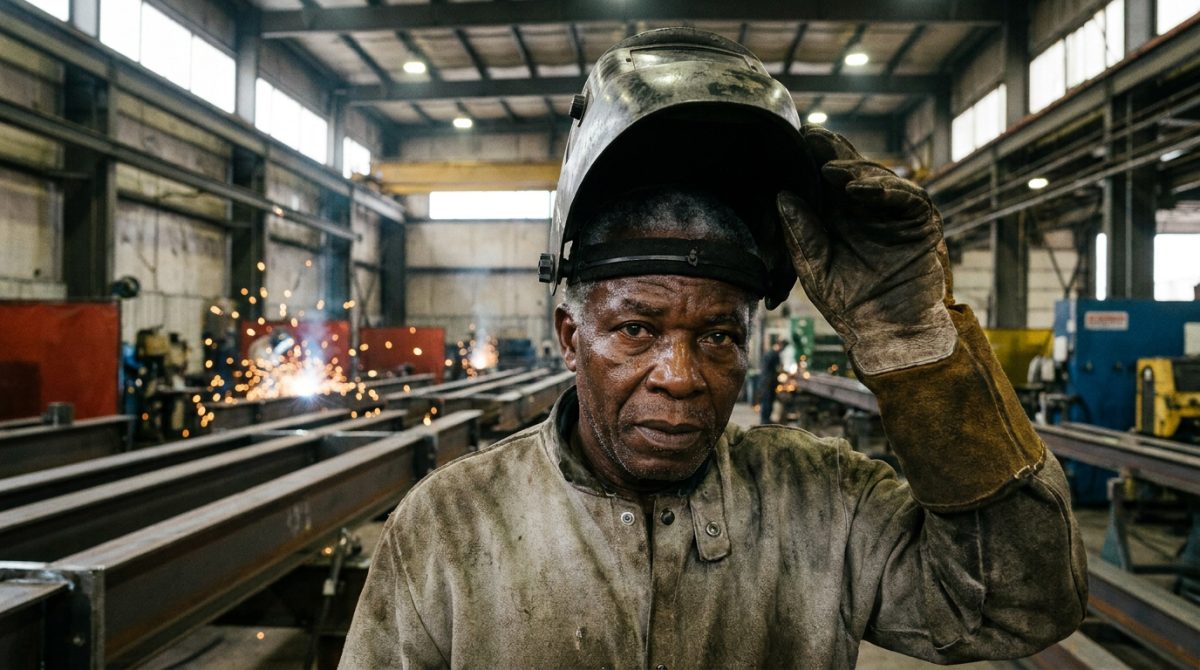
Welder jobs in Canada with visa sponsorship sit in an unusual position: the occupation is in genuine shortage, the pay is strong, and unlike most trades it has a clear, well-trodden route to permanent residence through the Federal Skilled Trades Program and category-based Express Entry draws.
Welding is also one of the few skilled trades where a Nigerian applicant’s existing certification carries real weight, provided it can be verified and supplemented with Canadian testing. This guide covers the visa mechanics, the certification that actually matters, verified employers, and the PR routes.
Quick summary: Welders are NOC 72106 (TEER 2), which is the sweet spot for Canadian immigration. Most sponsorship runs through an employer LMIA and a closed work permit. CWB (Canadian Welding Bureau) certification is what Canadian employers actually test against, and Red Seal endorsement raises both pay and PR scoring. Verify offers on Job Bank.
Why Canada Sponsors Foreign Welders
Welding underpins construction, pipeline, shipbuilding, mining and manufacturing work, and all of those sectors are expanding at once while the existing welding workforce ages out. Certified pressure and structural welders are particularly scarce, because those tickets take years to earn and cannot be improvised.
The consequence for a Nigerian welder is straightforward: if you hold genuine, demonstrable skill, Canadian employers have a strong commercial reason to invest in the LMIA process for you.
Types of Welding Jobs Available With Sponsorship
| Role | NOC Code | TEER | Typical Wage (CAD) | Demand |
|---|---|---|---|---|
| Structural welder | 72106 | TEER 2 | $28–45 / hour | High |
| Pressure / pipe welder | 72106 | TEER 2 | $35–60 / hour | Very high |
| Pipeline welder | 72106 | TEER 2 | $40–70 / hour | Very high — often rotational |
| Fabrication welder | 72106 | TEER 2 | $25–40 / hour | High |
| Boilermaker | 72103 | TEER 2 | $32–55 / hour | High |
| Ironworker (structural) | 72101 | TEER 2 | $30–50 / hour | High |
| Welding inspector | 22233 | TEER 2 | $35–58 / hour | Moderate — certification heavy |
| Welder’s helper | 75110 | TEER 5 | $18–26 / hour | Low PR value |
The gap between the top and bottom rows is the entire strategic point. A certified pressure welder can earn double a general fabrication welder and has far stronger PR prospects. Investing in tickets before you apply changes your position materially.
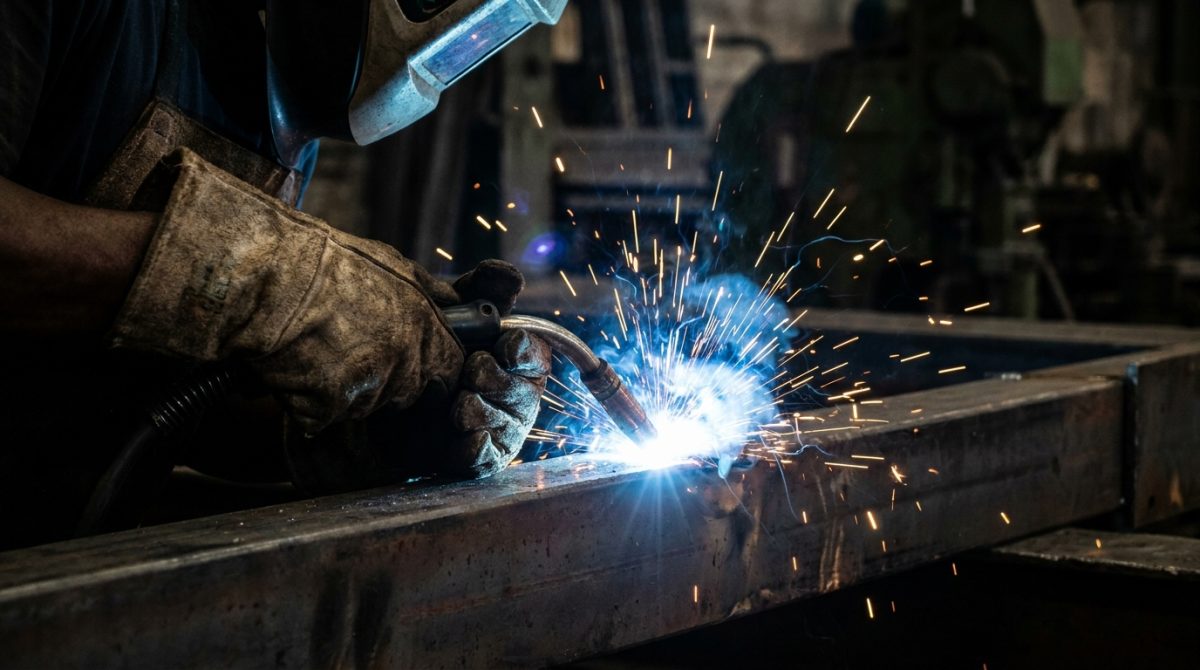
Certification: What Canadian Employers Actually Check
Nigerian welding qualifications are not automatically recognised in Canada. What matters is demonstrable, testable skill against Canadian standards.
- CWB certification — the Canadian Welding Bureau certifies welders against CSA standards. Most structural employers require it, and testing happens in Canada.
- Red Seal endorsement — the interprovincial standard. It permits mobility between provinces and adds points in immigration assessments.
- Provincial certification — each province regulates trades separately; some require compulsory certification.
- ASME / pressure tickets — required for pressure vessel and piping work, and the reason pressure welders command premium wages.
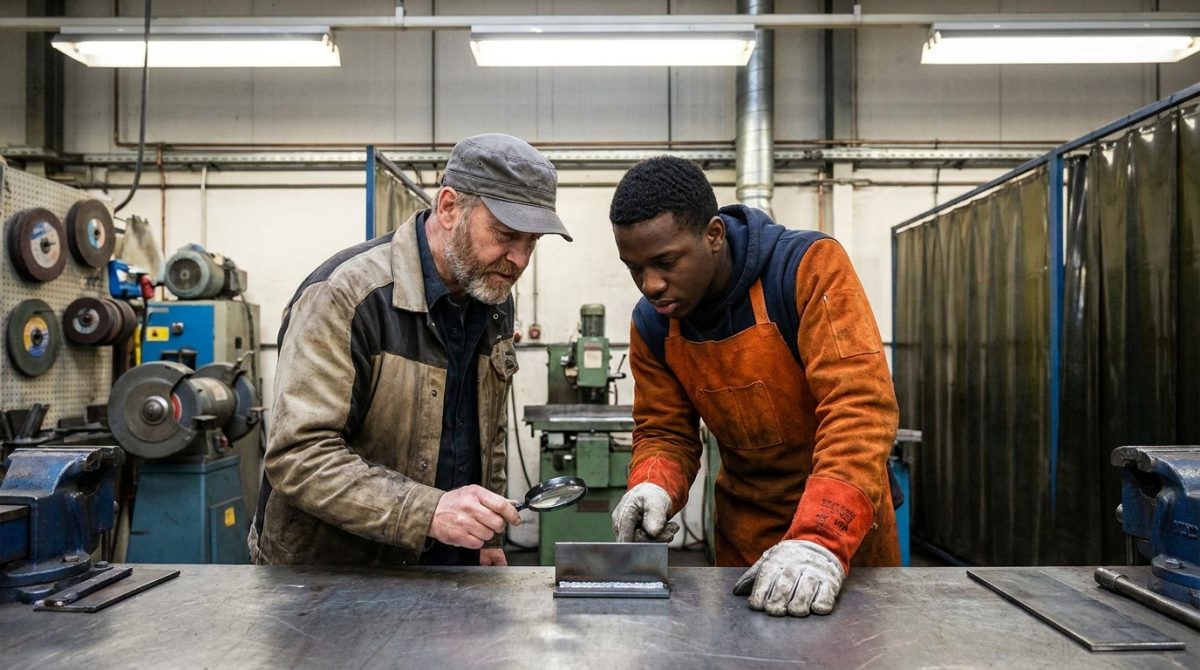
Practically, most sponsored welders arrive on a work permit, work under supervision, and complete CWB testing shortly after arrival. Employers who recruit internationally generally expect this and often fund it.
Visa Types for Welding Work in Canada
| Route | LMIA Required? | Duration | Employer Tied? |
|---|---|---|---|
| Employer-specific work permit | Yes | 1–3 years, renewable | Yes |
| Federal Skilled Trades (Express Entry) | No | Permanent | No |
| Express Entry trades category draw | No | Permanent | No |
| Provincial Nominee Program | Varies | Until PR processed | Usually |
| RCIP / Atlantic Immigration Program | No LMIA | Bridging to PR | Designated employer |
Visa Requirements for Employment
- A genuine job offer supported by a positive LMIA where required.
- Two or more years of documented welding experience, with reference letters specifying processes (SMAW, GMAW, GTAW, FCAW), materials and positions worked.
- Evidence of certification or demonstrable readiness to test to Canadian standards.
- Language ability — IELTS General or CELPIP. Required for the Federal Skilled Trades Program.
- Medical examination by an IRCC panel physician.
- Police clearance certificates from all countries of residence since age 18.
- Proof of funds where no job offer supports the application.
- Valid international passport.
Be specific about welding processes in your CV and reference letters. “Welder, 6 years” tells a Canadian employer nothing. “GTAW and SMAW on carbon steel pipe, 6G position, ASME IX qualified” tells them exactly what you can do. Vague documentation is why capable Nigerian welders get filtered out before interview.
Employment Agencies and International Recruitment
| Resource | What It Is | Official Website |
|---|---|---|
| Job Bank | Government job board; LMIA welding roles posted here | jobbank.gc.ca |
| Canadian Welding Bureau | Certification body Canadian employers test against | cwbgroup.org |
| Red Seal Program | Interprovincial trade certification standard | red-seal.ca |
| CICC | Verify any immigration consultant | college-ic.ca |
| Canadian Anti-Fraud Centre | Report recruitment fraud | antifraudcentre-centreantifraude.ca |
Companies Offering Visa-Sponsored Welding Jobs
The employers below are among Canada’s largest industrial and construction contractors and employ welders directly. Head office details were verified against each company’s own published contact information in August 2026.
| Company | Head Office Address | Telephone | Website |
|---|---|---|---|
| EllisDon | 1004 Middlegate Road, Suite 1000, Mississauga, ON L4Y 1M4 | 905.896.8900 | ellisdon.com |
| Aecon Group | 20 Carlson Court, Suite 105, Toronto, ON M9W 7K6 | (416) 297-2600 | aecon.com |
| Bird Construction | 5700 Explorer Drive, Suite 400, Mississauga, ON L4W 0C6 | 905.602.4122 | bird.ca |
| Ledcor Group | Suite 1500, 1055 West Hastings St., Vancouver, BC V6E 2E9 | 604-681-7500 | ledcor.com |
| Graham Construction | 10840 – 27 Street SE, Calgary, AB T2Z 3R6 | 403.570.5000 | grahambuilds.com |
| Pomerleau | 521 6e Avenue Nord, Saint-Georges, QC G5Y 0H1 | (418) 228-6688 | pomerleau.ca |
Permanent Residence Pathways
Federal Skilled Trades Program
Welding is a qualifying skilled trade. FSTP requires two years of experience in the previous five, a job offer or a certificate of qualification from a Canadian province, and language ability. It exists specifically for tradespeople whose profile would score poorly on a degree-weighted system.
Express Entry trades category draws
IRCC has run category-based selection rounds targeting trades occupations, using lower CRS cut-offs than general draws. For welders this is often the fastest permanent residence route available.
Provincial Nominee Programs
Provinces with heavy industrial and energy activity, particularly Alberta, Saskatchewan and Ontario, operate streams that welders qualify for. A nomination adds 600 CRS points.
Settlement Benefits for Welders and Their Families
| Benefit | On a Work Permit? | With PR? | Notes |
|---|---|---|---|
| Public healthcare | Usually yes | Yes | Provincial; some waiting periods |
| Free public schooling | Yes | Yes | No separate study permit needed |
| Spousal open work permit | Often yes | Yes | TEER 2 occupations generally qualify |
| Workers’ compensation | Yes | Yes | Essential in a high-hazard trade |
| Employer-funded certification | Often | Often | Many employers fund CWB testing |
| Freedom to change employers | No | Yes | Significant in a trade with wage competition |
| Path to citizenship | No | Yes | After three years of physical presence in five |
Requirements and Documents Checklist
- Valid international passport
- Signed job offer stating NOC 72106, wage and location
- Positive LMIA number where applicable
- Welding certificates and test records specifying processes and positions
- Employment reference letters with technical detail
- Language test results
- Educational Credential Assessment for Express Entry
- Police clearance certificates
- Panel physician medical
- Proof of funds where required
Applying at the High Commission and Visa Verification
Canadian High Commission Contacts in Nigeria
| Office | Address | Telephone | |
|---|---|---|---|
| High Commission of Canada, Abuja | 13010G Palm Close, Diplomatic Drive, Central Business District, Abuja (P.O. Box 5144) | +234 (209) 461 2900 | abuja@international.gc.ca |
| Deputy High Commission of Canada, Lagos | 4 Anifowoshe Street, Victoria Island, Lagos | +234 201 271 5665 | lagosconsular-consulaire@international.gc.ca |
Mistakes to Avoid During the Process
- Writing a vague CV. Specify processes, positions, materials and thicknesses.
- Assuming Nigerian certificates transfer automatically. They do not; expect Canadian testing.
- Accepting a welder’s helper classification. TEER 5 badly damages your PR position.
- Paying for a job offer or LMIA. Illegal in Canada.
- Ignoring the Federal Skilled Trades Program. Many welders qualify without realising it.
- Neglecting language testing. FSTP has language minimums that cannot be waived.
- Overlooking provincial compulsory certification rules.
How to Apply for Welder Jobs in Canada With Visa Sponsorship
- Rewrite your CV in technical Canadian terms — processes, positions, codes.
- Gather all welding test records and certificates.
- Sit IELTS General or CELPIP early.
- Search Job Bank for NOC 72106 roles open to LMIA candidates.
- Apply directly to the industrial contractors listed above.
- Create an Express Entry profile — check Federal Skilled Trades eligibility.
- Obtain a written offer and wait for employer LMIA approval.
- Complete biometrics and medicals, then arrange CWB testing after arrival.
Frequently Asked Questions
Can a Nigerian welder get a job in Canada with visa sponsorship?
Yes. Welding is NOC 72106 at TEER 2, one of the strongest positions in Canadian immigration. You will need documented experience, language testing, and willingness to certify to Canadian standards after arrival.
Is my Nigerian welding certificate valid in Canada?
Not automatically. Canadian employers test against CWB and CSA standards. Your existing certification demonstrates background, but expect to sit Canadian tests, often funded by the employer.
How much do welders earn in Canada?
Structural welders typically earn CAD $28 to $45 per hour. Pressure and pipeline welders can earn $40 to $70 per hour, though often on rotational schedules in remote locations.
Do I need a job offer to immigrate as a welder?
Not necessarily. The Federal Skilled Trades Program and trades-category Express Entry draws allow welders to obtain permanent residence without an employer, provided experience and language requirements are met.
What is Red Seal and do I need it?
Red Seal is the interprovincial trade certification standard. It is not required for an initial work permit, but it allows mobility between provinces, raises wages, and improves immigration scoring.
What is CWB certification?
The Canadian Welding Bureau certifies welders against Canadian CSA standards. Most structural employers require it, and testing takes place in Canada, usually shortly after you arrive.
Which province is best for welders?
Alberta and Saskatchewan for energy and pipeline work, Ontario for manufacturing and construction, and British Columbia for infrastructure. Each operates provincial streams that welders can access.
Can I bring my family?
Yes. Spouses of TEER 2 work permit holders generally qualify for open work permits, and dependent children attend public school without a study permit.
What welding processes are most in demand?
GTAW (TIG) and SMAW (stick) on pipe, particularly in 6G position, command the highest wages. Pressure ticket holders are the most consistently sought category.
Should I accept a welder’s helper role to get to Canada?
Be careful. Helper roles are TEER 5, which severely limits permanent residence access. If your goal is to settle permanently, hold out for a NOC 72106 classification.
Final Word
Welding is one of the best-positioned occupations for Nigerian workers seeking Canadian permanent residence. It sits at TEER 2, qualifies for a dedicated federal trades programme, and appears in category-based draws with reduced score thresholds.
The differentiator is documentation. Welders who present precise, technical evidence of what they can weld get interviews; those who present a generic CV do not. Invest in that before you invest in anything else.
This article is general information, not legal advice. Immigration and certification rules change frequently — confirm all requirements on canada.ca and cwbgroup.org before acting. See our Disclaimer.