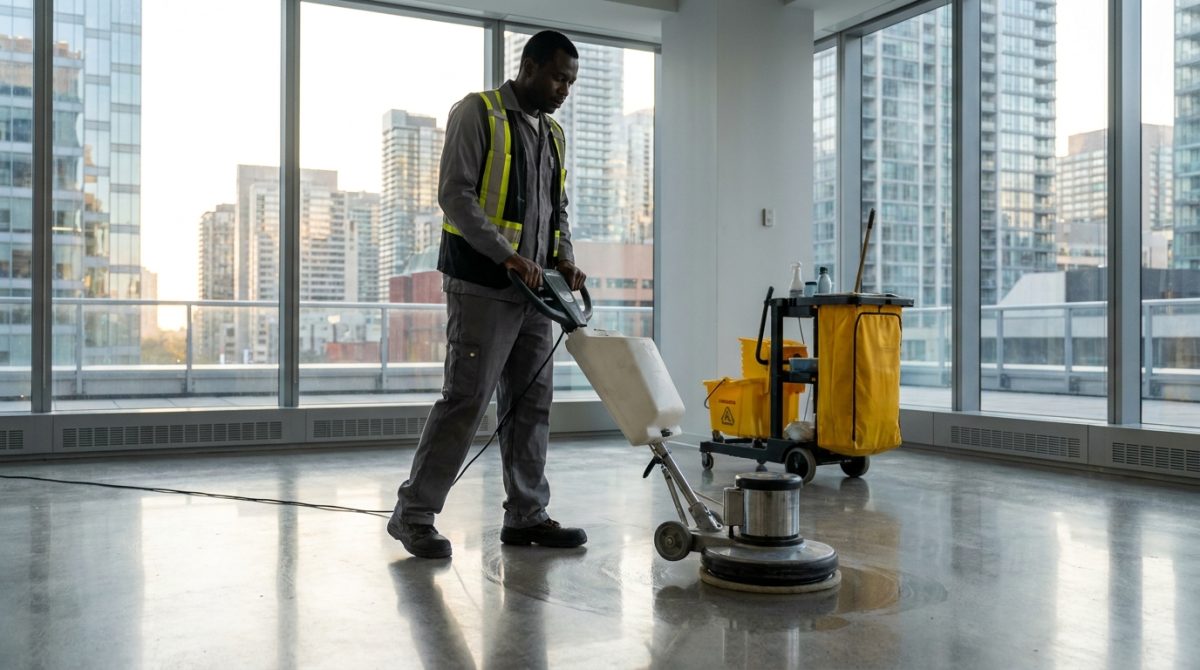
Cleaning jobs in Canada with visa sponsorship are one of the few remaining routes that a Nigerian applicant can take without a degree, without a professional licence, and without years of specialised training. You need to be reliable, physically capable, and able to follow instructions in English. That is genuinely the bar.
What you do need is an employer willing to obtain a Labour Market Impact Assessment. This guide explains how that works, what the job actually pays, which employers hire at scale, and how to avoid the fraud that dominates this category.
Quick summary: Light duty cleaners are NOC 65310, specialised cleaners NOC 65312, janitors and building superintendents NOC 73201. Most are TEER 4–5, sponsored through the low-wage stream of the Temporary Foreign Worker Program. Wages run CAD $17–25 per hour. Permanent residence is limited at this skill level and runs mainly through RCIP and provincial streams. Verify every posting on Job Bank.
Why Canada Sponsors Foreign Cleaners
Cleaning is essential, constant, and chronically hard to staff. Office towers, hospitals, hotels, airports, schools and food plants all require daily cleaning, much of it outside normal hours. Canadian workers have consistently declined night and early-morning shifts in the numbers required, and turnover is high.
That combination — permanent demand plus persistent local shortage — is exactly what an employer must demonstrate to obtain an LMIA. It is why cleaning remains sponsorable when many other low-skill occupations are not.
Types of Cleaning Jobs Available With Sponsorship
| Role | NOC Code | TEER | Typical Wage (CAD) | Notes |
|---|---|---|---|---|
| Light duty cleaner | 65310 | TEER 5 | $17–22 / hour | Offices, hotels, residential |
| Specialised cleaner | 65312 | TEER 5 | $19–26 / hour | Industrial, post-construction, biohazard |
| Janitor / caretaker | 73201 | TEER 3 | $20–30 / hour | Best PR access — TEER 3 |
| Building superintendent | 73201 | TEER 3 | $22–35 / hour | Often includes accommodation |
| Hospital cleaner | 65310 | TEER 5 | $19–26 / hour | Unionised, better benefits |
| Industrial plant cleaner | 65312 | TEER 5 | $20–28 / hour | Shift premiums common |
| Cleaning supervisor | 62022 | TEER 2 | $24–36 / hour | Strong PR access |
Read that table carefully, because it contains the most important decision you will make. Cleaner roles at TEER 5 have very weak permanent residence access. Janitor and caretaker roles at TEER 3 do not. The work is similar. The immigration consequences are completely different. If you can target NOC 73201 rather than 65310, do it.
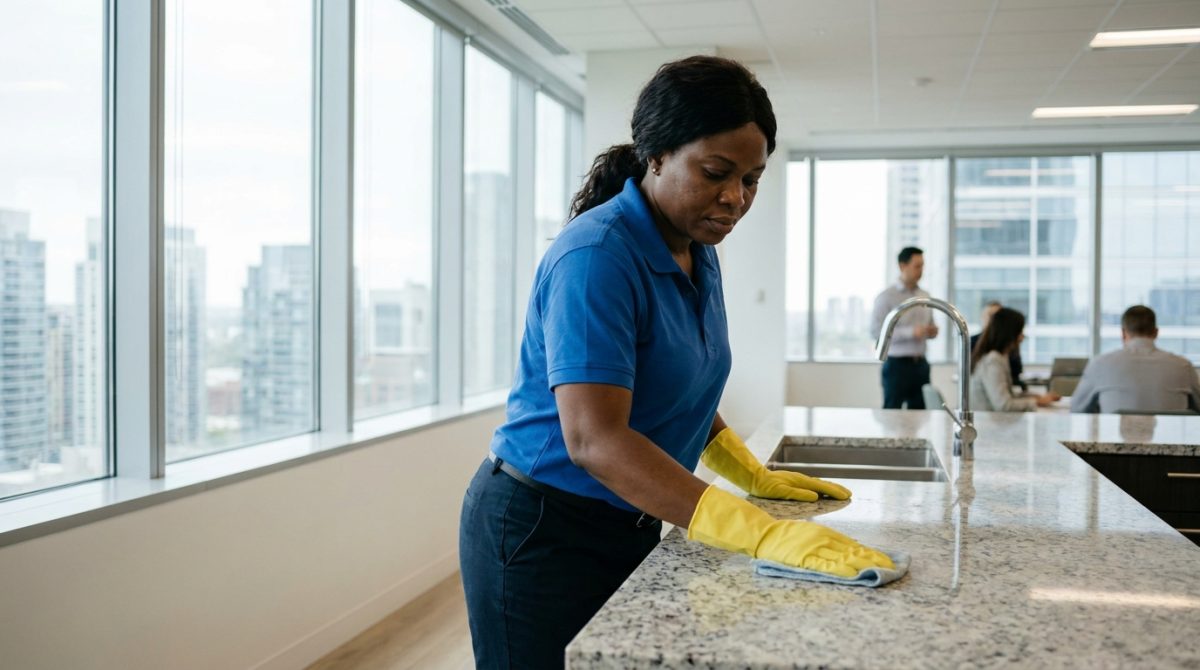
Visa Types for Cleaning Work in Canada
| Route | LMIA Required? | Duration | Employer Tied? |
|---|---|---|---|
| Low-wage stream work permit | Yes | Up to 2 years | Yes — one employer |
| High-wage stream work permit | Yes | Up to 3 years | Yes |
| RCIP-linked permit | No LMIA | Bridging to PR | Designated employer |
| Atlantic Immigration Program | No LMIA | Bridging to PR | Designated employer |
| Spousal open work permit | No | Matches principal | No |
Under the low-wage stream the employer carries additional obligations: they must assist with housing, cover round-trip transport in many cases, and provide private health insurance until provincial coverage begins. These are your entitlements, not favours.
Visa Requirements for Employment
- A genuine job offer from a Canadian employer with a positive LMIA.
- Basic English sufficient to understand safety instructions and chemical labels. Formal testing is not always required but is increasingly requested.
- Physical capability for standing, lifting and repetitive work.
- Some relevant experience — helpful but rarely mandatory.
- Medical examination by an IRCC panel physician, required for hospital and care-setting cleaning.
- Police clearance certificates from all countries of residence since age 18.
- Valid international passport.
Cleaning is the most heavily faked job category in Nigerian-facing recruitment fraud. The advert is always the same: “Canada cleaning jobs, no degree, no IELTS, free visa, accommodation provided” followed by a demand for a processing fee. A real LMIA costs the employer money and takes months to approve. Nobody pays a fee to be given a job.
Employment Agencies and Official Resources
| Resource | What It Is | Official Website |
|---|---|---|
| Job Bank | Government job board; LMIA cleaning roles posted here | jobbank.gc.ca |
| CICC | Verify any immigration consultant before paying | college-ic.ca |
| ESDC employer compliance list | Public list of employers found non-compliant | canada.ca |
| Provincial employment standards | Your wage, hours and overtime rights | Each provincial government site |
| Canadian Anti-Fraud Centre | Report recruitment fraud | antifraudcentre-centreantifraude.ca |
Who Actually Employs Cleaners at Scale in Canada
Cleaning in Canada is dominated by large facilities-management contractors rather than individual businesses. These companies hold contracts across hundreds of buildings and hire continuously. Apply through their official careers portals.
- National facilities management contractors — companies holding janitorial contracts for office towers, malls and airports.
- Healthcare authorities — hospital cleaning is often unionised with better wages and benefits.
- Hotel groups — housekeeping and public-area cleaning.
- Food processing plants — sanitation crews, usually paying above general cleaning rates.
- School boards and universities — caretaker roles, frequently NOC 73201 at TEER 3.
Target the last two. Food plant sanitation pays better than office cleaning, and school board caretaker roles are usually classified at TEER 3, which is what unlocks permanent residence.
Permanent Residence Pathways
Being honest about this matters more than selling optimism. TEER 5 cleaning work has among the weakest PR access in Canadian immigration. Express Entry’s Canadian Experience Class requires TEER 0–3, which excludes light duty cleaners entirely.
Your realistic routes are:
| Programme | Open to TEER 5 Cleaners? | Best For | Official Source |
|---|---|---|---|
| Rural Community Immigration Pilot | Yes, in participating communities | Willing to settle rurally | canada.ca |
| Atlantic Immigration Program | Yes, designated employers | NB, NS, PEI, NL | canada.ca |
| Provincial Nominee semi-skilled streams | Some provinces | Province-specific offers | Provincial sites |
| Canadian Experience Class | No — TEER 0–3 only | After moving to janitor role | canada.ca |
| Express Entry (FSW) | No at TEER 5 | Supervisors only | canada.ca |
The single most effective strategy is progression: move from light duty cleaner (TEER 5) to janitor or caretaker (TEER 3) or cleaning supervisor (TEER 2) after establishing yourself. That change alone converts you from someone with almost no federal PR access into a Canadian Experience Class candidate.
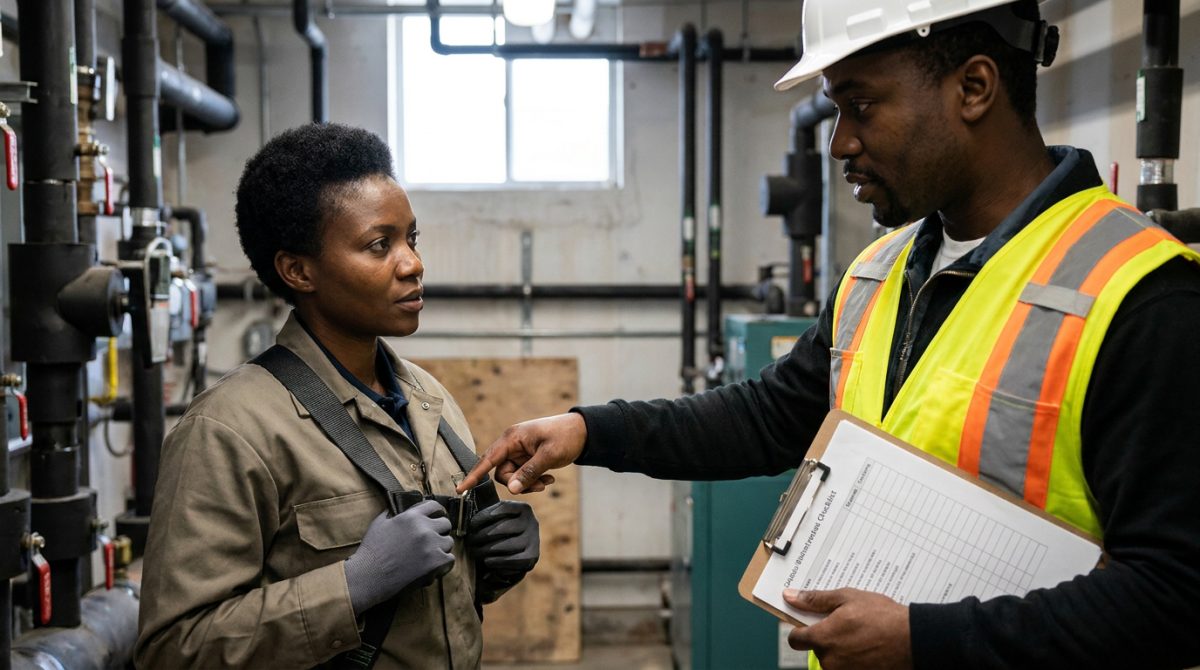
Settlement Benefits and Your Rights
| Benefit | On a Work Permit? | With PR? | Notes |
|---|---|---|---|
| Employer housing assistance | Yes, low-wage stream | — | Employer must help you find accommodation |
| Private health insurance | Yes | — | Employer-funded until provincial cover starts |
| Public healthcare | Usually yes | Yes | Provincial; waiting periods in some provinces |
| Free public schooling | Yes | Yes | Dependent children, no study permit needed |
| Workers’ compensation | Yes | Yes | Important — chemical and slip hazards are real |
| Overtime and minimum wage | Yes | Yes | Applies regardless of immigration status |
| Freedom to change employers | No | Yes | The main reason to pursue PR |
| Path to citizenship | No | Yes | After three years of physical presence in five |
WHMIS training is your legal right. Canadian law requires employers to train workers on hazardous materials before they handle cleaning chemicals. If you are handed chemicals with no training, that is a violation you can report to provincial occupational health and safety.
Requirements and Documents Checklist
- Valid international passport
- Signed job offer stating NOC code, wage, hours and location
- Positive LMIA number
- Any work references you can obtain
- Language test results if requested
- Police clearance certificates
- Panel physician medical where required
- Proof of funds for initial settlement
- Photographs to IRCC specification
Applying at the High Commission and Visa Verification
Canadian High Commission Contacts in Nigeria
| Office | Address | Telephone | |
|---|---|---|---|
| High Commission of Canada, Abuja | 13010G Palm Close, Diplomatic Drive, Central Business District, Abuja (P.O. Box 5144) | +234 (209) 461 2900 | abuja@international.gc.ca |
| Deputy High Commission of Canada, Lagos | 4 Anifowoshe Street, Victoria Island, Lagos | +234 201 271 5665 | lagosconsular-consulaire@international.gc.ca |
Mistakes to Avoid
- Paying anyone for a cleaning job offer. This is the defining scam of this category.
- Accepting NOC 65310 when 73201 is available. It quietly closes your PR options.
- Not checking the employer’s compliance history on the public ESDC list.
- Believing “free visa” adverts. No such thing exists; visas have published fees.
- Handling chemicals without WHMIS training. Demand it.
- Signing a contract with unexplained deductions for housing, transport or uniforms.
- Assuming the job leads automatically to PR. At TEER 5 it does not.
How to Apply for Cleaning Jobs in Canada With Visa Sponsorship
- Search Job Bank for NOC 65310, 65312 and 73201 roles open to LMIA candidates.
- Apply directly to facilities management contractors, hospitals, school boards and food plants.
- Prioritise NOC 73201 caretaker roles for their permanent residence advantage.
- Confirm the employer holds a positive LMIA and check their compliance record.
- Get housing, transport and deduction terms in writing before accepting.
- Apply for the work permit through the IRCC secure account.
- Complete biometrics and any required medical.
- On arrival, demand WHMIS training and plan your route to a TEER 3 role.
Frequently Asked Questions
Can I get a cleaning job in Canada with visa sponsorship without a degree?
Yes. Cleaning roles require no degree and no professional certification. What you need is an employer willing to obtain an LMIA, basic English for safety instructions, and physical capability for the work.
How much do cleaners earn in Canada?
Light duty cleaners typically earn CAD $17 to $22 per hour. Specialised, hospital and industrial cleaning pays more, often $19 to $28, and janitor or caretaker roles reach $20 to $30.
Do I need IELTS for a Canadian cleaning job?
Formal language testing is not always required for the work permit, though employers increasingly ask for it. Be very wary of adverts using “no IELTS needed” as the main selling point — that phrasing is a common scam signal.
Can cleaners get permanent residence in Canada?
It is difficult at TEER 5, because Express Entry’s Canadian Experience Class requires TEER 0 to 3. Realistic routes are the Rural Community Immigration Pilot, the Atlantic Immigration Program, certain provincial streams, or moving into a TEER 3 janitor role.
Will the employer provide accommodation?
Under the low-wage stream employers must assist you in finding suitable accommodation, and in many cases cover round-trip transport. Confirm exactly what is provided, and what will be deducted, in writing.
Is it legal for an agent to charge me for a Canadian cleaning job?
No. The LMIA fee is the employer’s legal responsibility and cannot be recovered from you. Most Canadian provinces also prohibit charging job seekers placement fees. Treat any such demand as fraud.
What is the difference between NOC 65310 and NOC 73201?
NOC 65310 is a light duty cleaner at TEER 5. NOC 73201 is a janitor, caretaker or building superintendent at TEER 3. The daily work overlaps considerably, but only TEER 3 qualifies for the Canadian Experience Class. Target 73201 wherever possible.
Can I bring my family on a cleaning work permit?
It is harder at TEER 5. Spousal open work permit eligibility is not automatic for low-skill occupations, so confirm the current rules for your specific NOC rather than assuming.
Are cleaning jobs in Canada safe to accept?
Legitimate ones are, and you have full protection under provincial employment and safety law regardless of immigration status. The risk is not the work but the recruitment — verify the employer, the LMIA and the posting on Job Bank first.
How long does the process take?
Typically six to fourteen months from job search to arrival, with the LMIA the longest stage. Low-wage stream permits are usually issued for up to two years.
Final Word
Cleaning work is one of the genuinely open doors into Canada for Nigerian applicants without qualifications, and the wages meaningfully exceed what the same work pays at home. But it is also the category where fraud is most concentrated, precisely because demand is so high.
Verify the posting on Job Bank, confirm the employer’s compliance record, refuse to pay anyone for a job offer, and aim for a NOC 73201 classification rather than 65310. That last detail is worth more to your future than any wage difference.
This article is general information, not legal advice. Immigration rules change frequently — confirm all requirements on canada.ca before acting. See our Disclaimer.