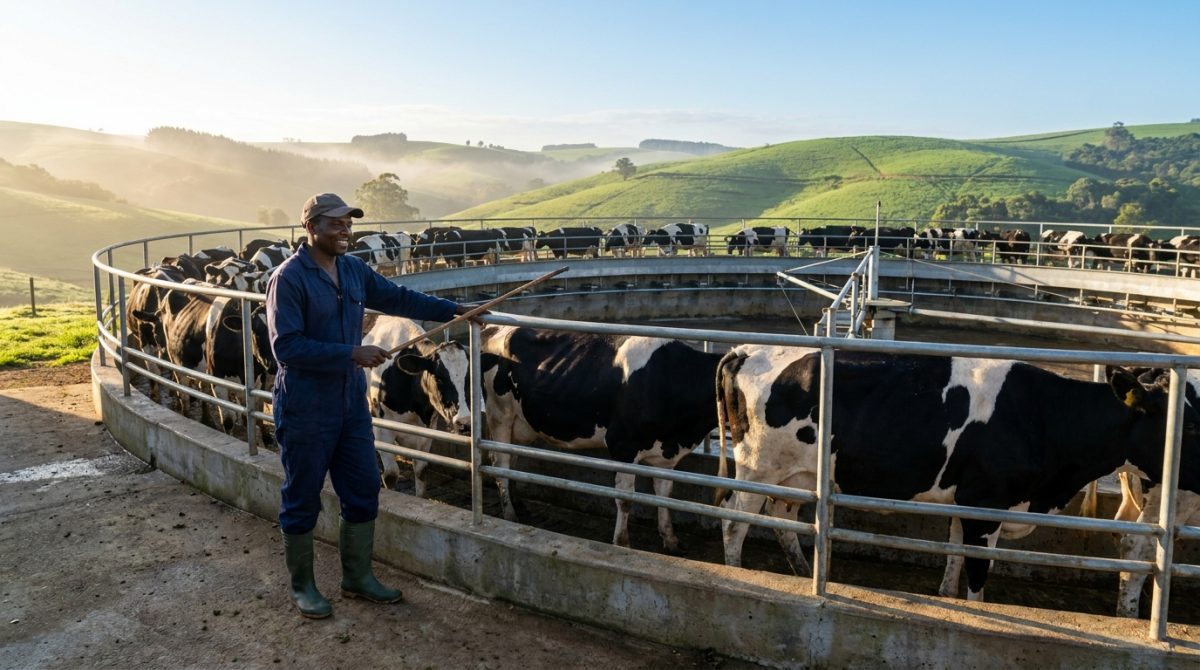
Dairy and farm jobs in New Zealand with visa sponsorship have quietly become one of the strongest accessible routes available to Nigerian workers — and most people searching for them have no idea how much the rules improved.
New Zealand removed the median wage requirement from its main work visa, extended lower-skilled visas to three years, and continues to face a dairy labour shortage it cannot solve domestically. For a worker without a degree, that combination is rare.
Quick summary: The Accredited Employer Work Visa (AEWV) is the main route, open to all nationalities. Immigration New Zealand has removed the median wage requirement — only the New Zealand minimum wage applies, though you must be paid on par with New Zealand counterparts. ANZSCO Level 4 and 5 visas now run up to 3 years. Your employer must hold accreditation before they can hire you. Verify everything at immigration.govt.nz.
Why New Zealand Sponsors Foreign Dairy Workers
Dairy is New Zealand’s largest export industry, and it runs on farms scattered across rural regions with small populations. Milking starts before dawn, seven days a week, in places where there is no local labour pool to draw on. The industry has depended on migrant workers for decades and openly acknowledges it.
Unlike sectors where employers reluctantly turn to immigration, New Zealand dairy farmers actively recruit internationally, understand the visa process, and frequently provide on-farm housing as standard.
What Changed — and Why It Matters
| Rule | Current Position | What It Means for You |
|---|---|---|
| Median wage requirement | Removed | Lower-skilled roles are viable again |
| Minimum pay | New Zealand minimum wage | Plus parity with local workers |
| Visa length, ANZSCO 4–5 | Up to 3 years | Extended from shorter terms |
| Visa length, ANZSCO 1–3 | Up to 5 years | Longer for skilled roles |
| Nationality restriction | None | Nigerians fully eligible |
| Employer requirement | Must hold accreditation | Check before applying |
| Local advertising | Required for lower-skilled roles | Employer must engage Work and Income first |
The removal of the median wage requirement is the single most important development here. Under the old rules, lower-skilled roles had to be paid at or above a threshold most dairy farms could not meet, which effectively closed the route. That barrier is gone.
Types of Farm Jobs Available With Sponsorship
| Role | Skill Level | Typical Pay (NZD) | Visa Length |
|---|---|---|---|
| Farm assistant / dairy worker | ANZSCO 5 | $25–30 / hour | Up to 3 years |
| Herd manager | ANZSCO 3–4 | $30–38 / hour | Up to 3–5 years |
| Assistant farm manager | ANZSCO 2–3 | $35–45 / hour | Up to 5 years |
| Farm manager | ANZSCO 1–2 | $40–55 / hour | Up to 5 years |
| Tractor / machinery operator | ANZSCO 4 | $27–34 / hour | Up to 3 years |
| Calf rearer (seasonal) | ANZSCO 5 | $24–29 / hour | Seasonal |
| Shepherd / stock worker | ANZSCO 4–5 | $25–32 / hour | Up to 3 years |
| Horticulture worker | ANZSCO 5 | $24–28 / hour | Up to 3 years |
The progression ladder in New Zealand dairy is unusually clear and unusually fast. Farm assistant to herd manager to assistant farm manager is a well-trodden path, and moving up the ANZSCO levels extends your visa from three years to five while opening residence options.
The Accreditation System — Check This First
New Zealand employers cannot simply offer you a job. They must first be accredited by Immigration New Zealand, which involves meeting employment standards, financial checks and commitments on how migrant workers are treated.
- The employer obtains accreditation from Immigration New Zealand.
- They apply for a Job Check, proving the role and pay are genuine and that they advertised locally.
- For lower-skilled roles they must engage Work and Income and interview any suitable New Zealand candidates first.
- You then apply for the AEWV using the approved job token.
An unaccredited employer cannot hire you, no matter what they promise. Immigration New Zealand publishes accreditation status, and this is the first thing to verify — before documents, before payments, before anything. Any “agent” offering New Zealand farm work without a named accredited employer is not offering you a real job.
Visa Requirements
- A job offer from an accredited employer with an approved Job Check.
- Relevant experience or qualifications appropriate to the role — farm experience helps considerably.
- English language ability — requirements apply and are stricter for lower-skilled roles.
- Good health, evidenced by medical examination including chest X-ray.
- Good character, evidenced by police clearance certificates.
- Genuine intention to work in the role offered.
- Valid international passport.
What Dairy Work Actually Involves
Being honest about this matters, because dairy is romanticised in recruitment material and the reality is demanding.
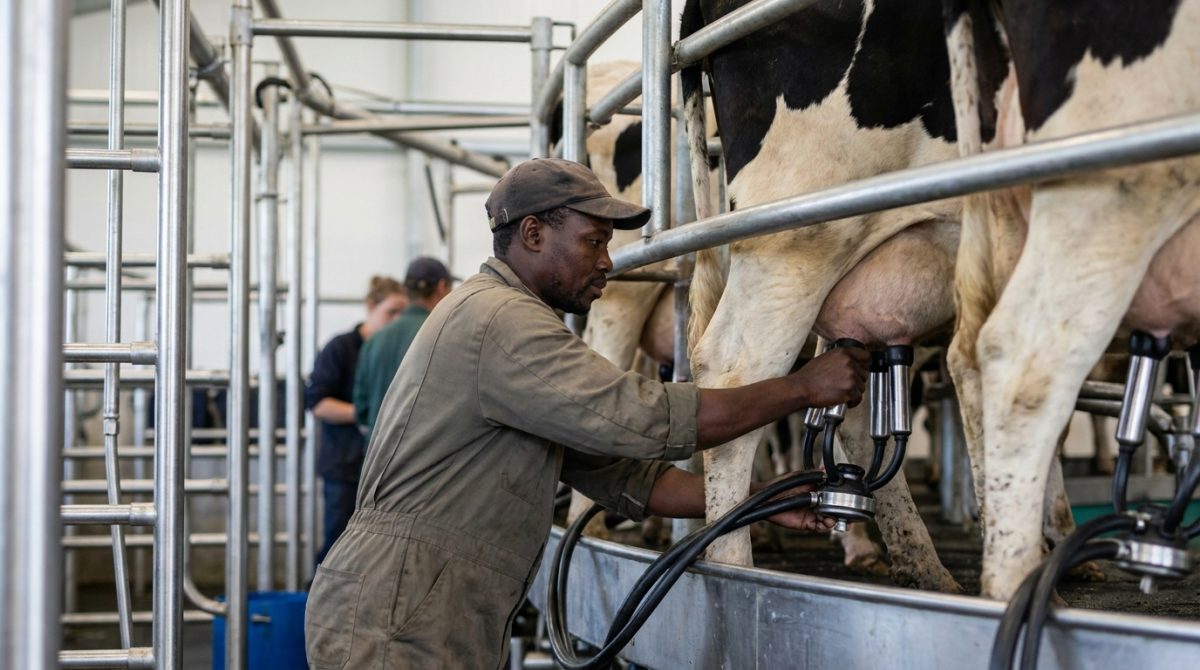
- Early starts. Milking typically begins between 4am and 5am, and again in the afternoon.
- Seven-day rosters. Cows do not observe weekends; rosters usually run on patterns such as 11 days on, 3 off.
- Outdoor work in all weather, including New Zealand’s wet winters.
- Physical demands — standing, lifting, handling livestock.
- Rural isolation. Many farms are far from towns, and you will likely need a driving licence and vehicle.
- Calving season is the most intense period, with long hours over several weeks.
In exchange: strong pay for unqualified work, frequently free or heavily subsidised housing, a three-year visa, and a clear promotion ladder.
Residence Pathways
| Route | Open to Farm Workers? | Notes |
|---|---|---|
| Skilled Migrant Category | At higher ANZSCO levels | Points-based; managers and supervisors |
| Green List (Straight to Residence) | Some agricultural roles | Check the current Green List |
| Green List (Work to Residence) | Some agricultural roles | Requires period of NZ work first |
| Sector agreements | Varies | Some sectors negotiate specific terms |
| AEWV alone | No direct route | Temporary visa; progression needed |
Be realistic: an entry-level farm assistant role does not lead directly to residence. What it does is get you into New Zealand legally for up to three years, on decent pay, with a genuine ladder to climb. Herd managers and farm managers have materially better residence prospects, and those promotions are achievable.
Settlement Benefits and Your Rights
| Benefit | On an AEWV? | Notes |
|---|---|---|
| On-farm accommodation | Commonly provided | Deductions must be agreed in writing |
| Publicly funded healthcare | Yes, for visas 2 years or longer | Confirm eligibility for your visa length |
| Children in state schools | Generally yes | Depends on your visa conditions |
| Partner work rights | Varies by skill level | Confirm for your specific role |
| Minimum wage and holiday pay | Yes | Full New Zealand employment law applies |
| ACC injury cover | Yes | Automatic, no-fault accident cover |
| KiwiSaver | Generally yes | Workplace savings scheme |
| Change employer | Requires variation of conditions | Not automatic |
ACC is worth understanding. New Zealand operates a no-fault accident compensation scheme covering everyone in the country, including migrant workers. If you are injured on the farm, you are covered regardless of fault — a genuinely strong protection in a sector with real injury risk.
How to Apply for New Zealand Dairy Jobs
- Search for accredited employers advertising farm roles and confirm accreditation on immigration.govt.nz.
- Apply directly to farms and dairy groups through their own websites and New Zealand job boards.
- Document any agricultural, livestock or machinery experience in detail.
- Confirm the employer holds an approved Job Check for your role.
- Check the accommodation arrangement and any deductions in writing.
- Apply for the AEWV online with your job token.
- Complete medicals, chest X-ray and police clearances.
- On arrival, obtain a New Zealand driving licence and plan your progression to herd manager.
Frequently Asked Questions
Can Nigerians get dairy farm jobs in New Zealand with visa sponsorship?
Yes. The Accredited Employer Work Visa has no nationality restriction. You need a job offer from an employer holding Immigration New Zealand accreditation and an approved Job Check for the role.
Has the median wage requirement really been removed?
Yes. Immigration New Zealand confirmed employers under the AEWV are no longer required to pay the median wage. The New Zealand minimum wage applies, and migrant workers must be paid on par with New Zealand counterparts doing the same work.
How long can I stay on an AEWV?
Up to three years for ANZSCO skill level 4 and 5 roles, and up to five years for skill levels 1 to 3. Progressing into a higher-skilled role extends your maximum stay.
How much do dairy workers earn in New Zealand?
Farm assistants typically earn NZD $25 to $30 per hour, herd managers $30 to $38, and farm managers $40 to $55. Many roles include accommodation, which changes the real value considerably.
Do I need farming experience?
It helps a great deal and many employers require it, particularly for roles involving livestock handling or machinery. Document any agricultural experience you have in detail.
Is accommodation provided?
On-farm housing is common in New Zealand dairy, sometimes free and often heavily subsidised. Any deduction must be agreed in writing, so confirm the arrangement before accepting.
What are the working hours really like?
Milking usually starts between 4am and 5am and again in the afternoon, on rosters that run across weekends. Calving season involves long hours over several weeks. It is demanding work.
Can dairy work lead to New Zealand residence?
Not directly from an entry-level role. Residence generally runs through the Skilled Migrant Category or Green List routes, which favour higher ANZSCO levels. Promotion to herd or farm manager materially improves your prospects.
How do I check if an employer is accredited?
Immigration New Zealand publishes accreditation status. Verify it before sending documents or money to anyone. An unaccredited employer cannot lawfully hire you under this visa.
Can I bring my family?
Partner work rights and children’s schooling depend on your role’s skill level and visa conditions. Confirm the position for your specific job rather than assuming.
Final Word
New Zealand dairy is one of the few places where an applicant with no degree and no trade certificate can obtain a three-year work visa on solid wages with housing included. The removal of the median wage requirement reopened a door that had effectively been shut.
Verify employer accreditation before anything else, be realistic about 4am starts and rural isolation, and treat promotion to herd manager as the goal — because that is where the visa length and residence prospects genuinely improve.
This article is general information, not legal advice. Immigration rules change frequently — confirm all requirements on immigration.govt.nz before acting. See our Disclaimer.