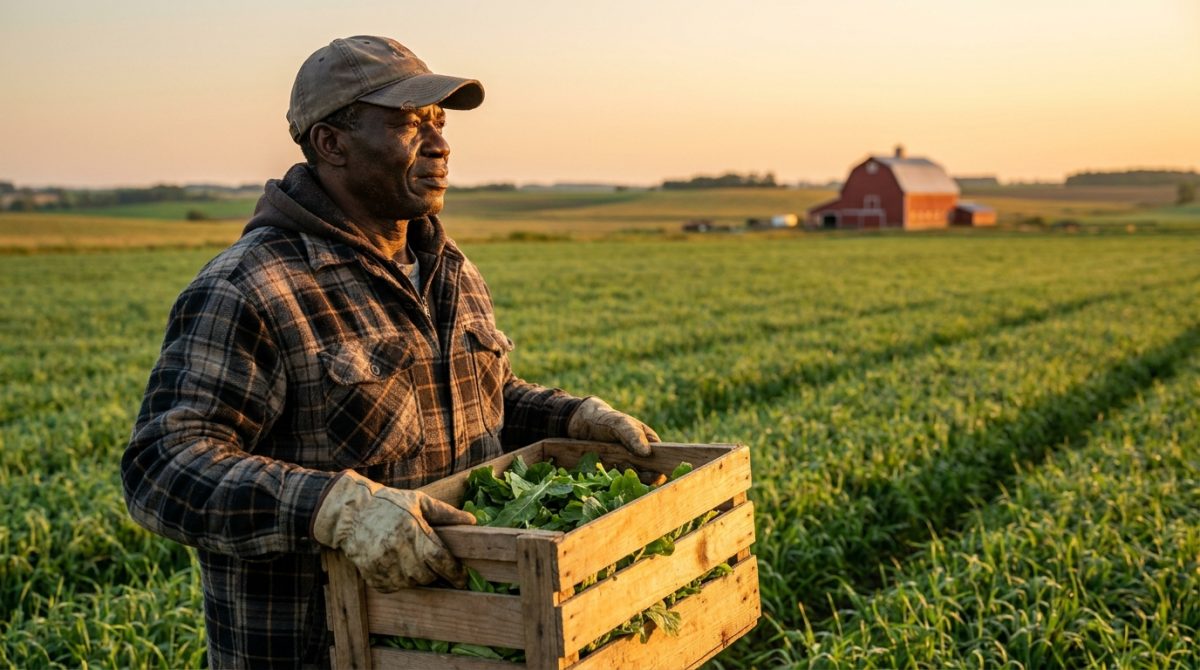
Farm worker jobs in Canada with visa sponsorship are genuinely available to Nigerian applicants — but not through the programme most websites tell you to use. Getting this distinction right is the difference between a viable application and months wasted on a route you are not eligible for.
Canada’s agriculture sector depends heavily on foreign labour, with tens of thousands of temporary workers arriving each year to plant, tend and harvest. This guide explains which stream Nigerians can actually use, what the work pays, what your rights are, and how permanent residence works for agricultural occupations.
Critical eligibility point: the Seasonal Agricultural Worker Program (SAWP) is not open to Nigerians. SAWP operates under bilateral agreements with Mexico, Jamaica, Trinidad and Tobago, Barbados and the Organisation of Eastern Caribbean States only. If a recruiter offers you a “SAWP visa” as a Nigerian citizen, they are describing something that cannot legally exist. The correct route is the Agricultural Stream or the general low-wage stream of the Temporary Foreign Worker Program.
Quick summary: Nigerians access Canadian farm work through the Agricultural Stream of the TFWP, which requires an employer-obtained LMIA and has no country restriction. General farm workers are NOC 85100 (TEER 5), harvesting labourers NOC 85101. Wages typically run CAD $16–22 per hour. Permanent residence is limited at TEER 5, running mainly through RCIP and specific provincial streams. Verify on Job Bank.
Why Canada Sponsors Foreign Farm Workers
Canadian agriculture faces a structural labour shortage that domestic recruitment has never resolved. The work is seasonal, physically demanding, and often in remote areas, and Canadian workers have consistently declined it in the numbers required. Without foreign labour, significant portions of Canada’s fruit, vegetable and greenhouse production would not be harvested.
That dependency is why the federal government maintains dedicated agricultural immigration streams, and why farm employers are willing to fund LMIAs and, in most cases, provide housing and airfare.
Types of Farm Jobs Available With Sponsorship
| Role | NOC Code | TEER | Typical Wage (CAD) | PR Access |
|---|---|---|---|---|
| General farm worker | 85100 | TEER 5 | $16–22 / hour | Limited — RCIP, some PNP |
| Harvesting labourer | 85101 | TEER 5 | $16–20 / hour | Limited |
| Greenhouse worker | 85103 | TEER 5 | $17–23 / hour | Limited |
| Livestock / dairy worker | 85100 | TEER 5 | $17–24 / hour | Limited — year-round work helps |
| Farm supervisor | 82030 | TEER 2 | $22–35 / hour | Strong — CEC, PNP |
| Agricultural equipment operator | 85100 | TEER 5 | $18–26 / hour | Limited |
| Meat processing worker | 94141 | TEER 4 | $18–26 / hour | Moderate — several PNP streams |
| Agricultural technician | 22114 | TEER 2 | $25–38 / hour | Strong |
Two roles in that table deserve attention if permanent residence matters to you. Farm supervisor (NOC 82030) is TEER 2, and meat processing (NOC 94141) is TEER 4 with several dedicated provincial streams. Both have substantially better immigration prospects than general TEER 5 field work, and both are realistic progressions after a season or two.
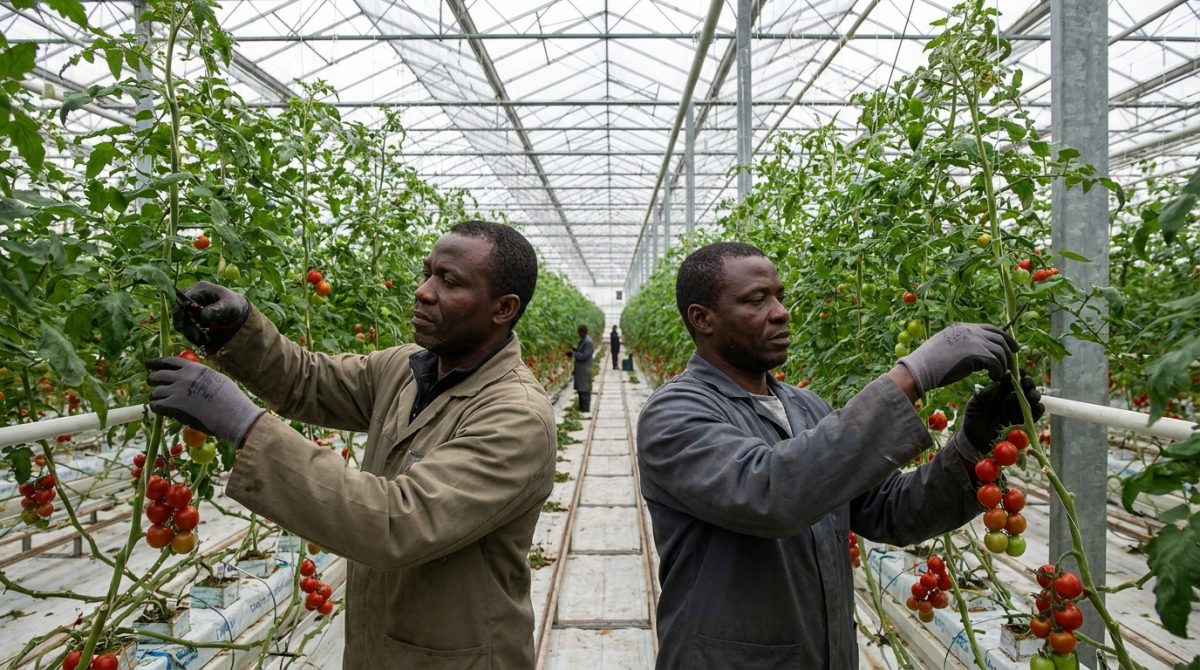
Visa Types for Agricultural Work in Canada
| Stream | Open to Nigerians? | Duration | Key Features |
|---|---|---|---|
| Agricultural Stream (TFWP) | Yes | Up to 2 years | Employer must provide housing; commodity list applies |
| Low-wage stream (TFWP) | Yes | Up to 2 years | Broader occupations; housing support required |
| High-wage stream (TFWP) | Yes | Up to 3 years | Supervisory and technical roles |
| Seasonal Agricultural Worker Program | No | Max 8 months | Mexico and Caribbean states only |
| RCIP-linked permit | Yes | Bridging to PR | Designated employer in participating community |
Visa Requirements for Employment
- A genuine job offer from a Canadian farm operator, supported by a positive LMIA.
- Physical fitness for sustained outdoor manual work in variable weather.
- Relevant experience — agricultural background helps considerably, documented where possible.
- Basic language ability — requirements are lower than skilled streams but safety instructions must be understood.
- Medical examination by an IRCC panel physician.
- Police clearance certificates from all countries of residence since age 18.
- Valid international passport.
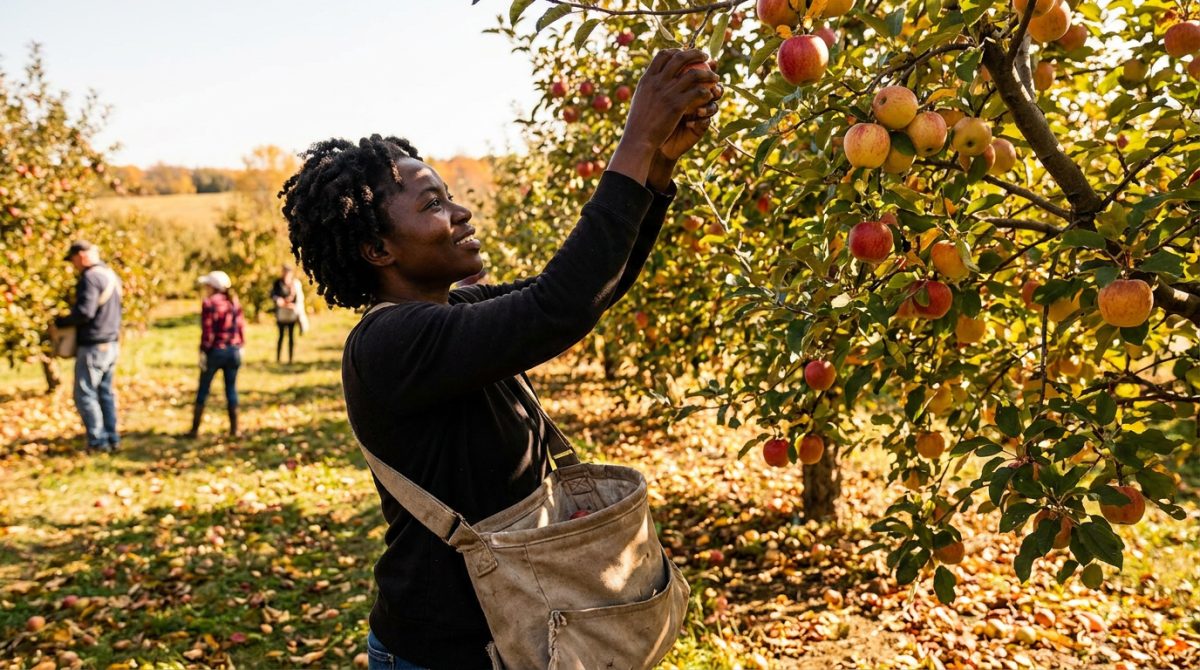
Your Rights as an Agricultural Worker
This section matters more in agriculture than in most sectors, because farm workers are among the most frequently exploited groups in Canada.
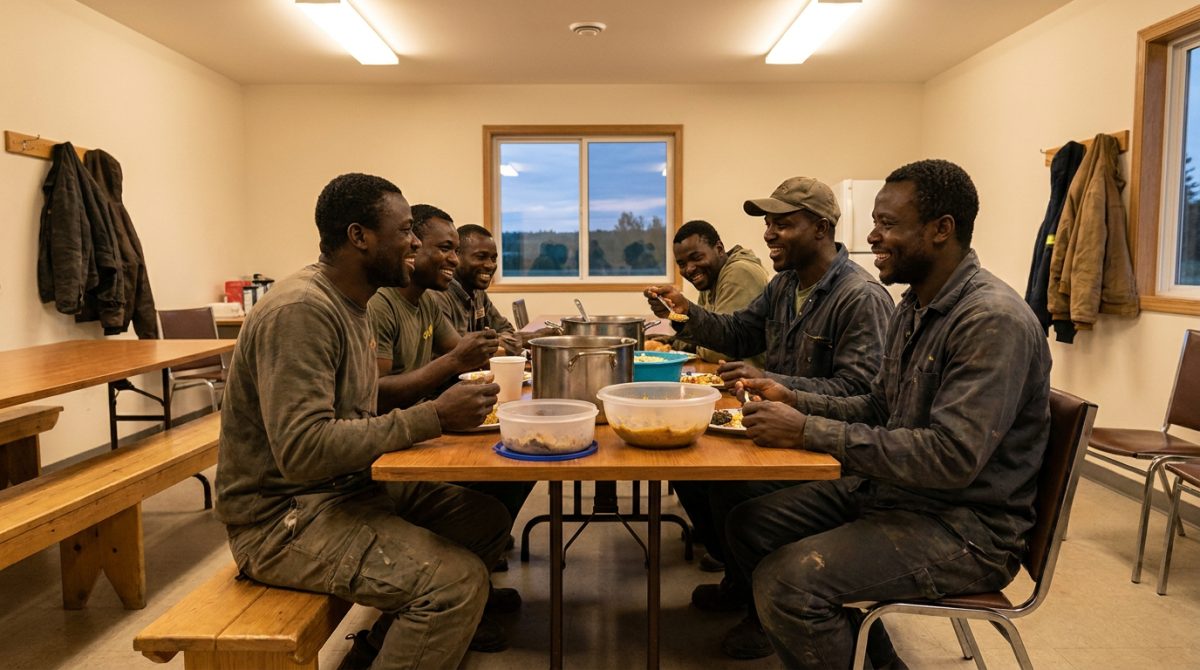
- Housing: under the Agricultural Stream, employers must provide adequate housing that meets provincial inspection standards. They may deduct only a regulated amount, if any.
- Transport: employers are generally responsible for round-trip airfare under the Agricultural Stream.
- Wages: you must be paid at least the wage stated on the LMIA, and at least provincial minimum wage.
- Health coverage: the employer must ensure health insurance from day one where provincial coverage has a waiting period.
- Workers’ compensation: mandatory coverage for workplace injury.
- Passport: no employer may confiscate or hold your passport. This is illegal.
- Open work permit for vulnerable workers: if you experience abuse, IRCC can issue a permit allowing you to leave that employer without losing status.
Employment Agencies and International Recruitment
| Resource | What It Is | Official Website |
|---|---|---|
| Job Bank | Government job board; LMIA farm roles posted here | jobbank.gc.ca |
| ESDC agricultural hiring pages | Official rules employers must follow | canada.ca |
| CICC | Verify any immigration consultant | college-ic.ca |
| Migrant Workers Centre | Free legal information for migrant workers | mwcbc.ca |
| Canadian Anti-Fraud Centre | Report recruitment fraud | antifraudcentre-centreantifraude.ca |
Farm work is the most heavily targeted category for Nigerian-facing recruitment fraud. The pattern is consistent: an agent advertises “Canada farm jobs, no degree, no IELTS, visa guaranteed”, then charges fees of several hundred thousand naira for an offer that does not exist. Genuine farm employers pay the LMIA cost themselves and recruit through documented channels.
Permanent Residence Pathways
Honesty matters here: TEER 5 agricultural work has among the weakest PR access of any Canadian occupation. Federal streams largely exclude it. That does not mean permanent residence is impossible, but it does mean you need a deliberate strategy.
Rural Community Immigration Pilot (RCIP)
RCIP is the most realistic federal-linked route. It operates in 14 designated communities across six provinces, many of them agricultural regions with genuine labour shortages, and it accommodates occupations that Express Entry does not.
Provincial Nominee Programs
Some provinces operate semi-skilled or agri-food streams that include farm and food processing occupations. Availability changes, so check the relevant provincial page.
Progression into a higher-TEER role
The most reliable long-term strategy. Moving into farm supervision (TEER 2) or an agricultural technician role (TEER 2) after establishing yourself opens Canadian Experience Class and mainstream PNP eligibility.
| Programme | Open to TEER 5 Farm Work? | Best For | Official Source |
|---|---|---|---|
| Rural Community Immigration Pilot | Yes, in participating communities | Workers settling rurally | canada.ca |
| Provincial Nominee Program | Some agri-food streams | Province-specific offers | Provincial sites |
| Atlantic Immigration Program | Yes, designated employers | Atlantic Canada | canada.ca |
| Canadian Experience Class | No — TEER 0–3 only | After promotion to supervisor | canada.ca |
| Express Entry (FSW) | No at TEER 5 | Technicians and supervisors | canada.ca |
Settlement Benefits for Agricultural Workers
| Benefit | On a Work Permit? | With PR? | Notes |
|---|---|---|---|
| Employer-provided housing | Yes, Agricultural Stream | — | Must meet provincial inspection standards |
| Health insurance from day one | Yes | Yes | Employer must cover any provincial waiting period |
| Workers’ compensation | Yes | Yes | Mandatory for farm employers |
| Employment standards protection | Yes | Yes | Some agricultural exemptions vary by province |
| Free public schooling for children | Yes, if family accompanies | Yes | Family accompaniment is uncommon on seasonal permits |
| Freedom to change employers | No | Yes | The core benefit of obtaining PR |
| Path to citizenship | No | Yes | After three years of physical presence in five |
Requirements and Documents Checklist
- Valid international passport
- Signed job offer stating NOC code, wage, hours and housing arrangements
- Positive LMIA number
- Evidence of agricultural experience where available
- Police clearance certificates
- Panel physician medical examination
- Proof of funds where required
- Photographs to IRCC specification
Meeting the Eligibility Requirements
Agricultural applications are assessed less on credentials than on genuineness. Officers examine whether the job offer is real, whether the employer has a compliant history, and whether you intend to leave at the end of your permit. A well-documented offer from an established farm with a clean compliance record is worth far more than any certificate.
Applying at the High Commission and Work Visa Verification
Canadian High Commission Contacts in Nigeria
| Office | Address | Telephone | |
|---|---|---|---|
| High Commission of Canada, Abuja | 13010G Palm Close, Diplomatic Drive, Central Business District, Abuja (P.O. Box 5144) | +234 (209) 461 2900 | abuja@international.gc.ca |
| Deputy High Commission of Canada, Lagos | 4 Anifowoshe Street, Victoria Island, Lagos | +234 201 271 5665 | lagosconsular-consulaire@international.gc.ca |
Mistakes to Avoid During the Process
- Believing you can use SAWP. Nigeria is not a participating country. This single misunderstanding drives a large share of farm-job fraud.
- Paying an agent for a farm job offer. The LMIA is the employer’s cost.
- Accepting an offer with no housing detail. Agricultural Stream employers must provide inspected accommodation.
- Surrendering your passport. Illegal in Canada under any circumstances.
- Assuming farm work leads directly to PR. At TEER 5 it usually does not without a deliberate strategy.
- Not checking the employer’s compliance history. Employers found non-compliant appear on a public ESDC list.
- Ignoring contract deductions. Check what is being deducted for housing, transport and equipment.
How to Apply for Farm Worker Jobs in Canada With Visa Sponsorship
- Search Job Bank for NOC 85100, 85101 and 85103 roles open to LMIA candidates.
- Apply to established farm operations, greenhouse growers and agri-food processors directly.
- Confirm the offer specifies the Agricultural Stream or low-wage stream, not SAWP.
- Check housing, transport and deduction terms in writing.
- Wait for the employer’s LMIA approval at their cost.
- Apply for the work permit via the IRCC portal.
- Complete biometrics and the panel medical.
- On arrival, learn your provincial employment rights and plan a route to a higher-TEER role.
Frequently Asked Questions
Can Nigerians apply for the Seasonal Agricultural Worker Program?
No. SAWP operates only under bilateral agreements with Mexico, Jamaica, Trinidad and Tobago, Barbados and the Organisation of Eastern Caribbean States. Nigerian citizens must use the Agricultural Stream or low-wage stream of the Temporary Foreign Worker Program instead.
How much do farm workers earn in Canada?
General farm workers typically earn CAD $16 to $22 per hour, with greenhouse and livestock roles at the higher end. Overtime rules for agriculture vary by province, so confirm what applies where you will work.
Do I need farming experience to be sponsored?
It helps significantly and many employers require it, but requirements are lower than for skilled trades. Physical capability and a genuine, documented job offer matter most.
Does the employer provide accommodation?
Under the Agricultural Stream, yes — employers must provide housing that meets provincial inspection standards, and only regulated deductions may be made. Confirm the arrangement in writing before accepting.
Can farm workers get permanent residence in Canada?
It is harder than for skilled occupations because general farm work sits at TEER 5, which federal streams largely exclude. The realistic routes are the Rural Community Immigration Pilot, certain provincial agri-food streams, or progressing into a supervisory TEER 2 role.
Can I bring my family on a farm work permit?
It is uncommon on seasonal agricultural permits. Family accompaniment is more achievable on longer permits in higher-skilled agricultural roles.
Is IELTS required for farm jobs in Canada?
Language requirements are lower than skilled streams and some agricultural positions do not require formal testing, but you must be able to understand safety instructions. Beware of recruiters using “no IELTS needed” as the hook in a scam advert.
What happens if my employer mistreats me?
Provincial employment law protects you regardless of immigration status, and IRCC issues open work permits for vulnerable workers so you can leave an abusive employer without losing status. Contact a migrant worker support organisation immediately.
How long can I stay on an agricultural work permit?
The Agricultural Stream generally allows up to two years, with renewal possible. SAWP’s eight-month limit does not apply to you, since Nigerians are not eligible for that programme.
How do I check whether a farm employer is legitimate?
Confirm the posting on Job Bank, ask for the LMIA number, verify the business independently, and check the public ESDC list of employers found non-compliant with the Temporary Foreign Worker Program.
Final Word
Farm work is a real and accessible route into Canada for Nigerian workers, provided you apply through the correct stream. The most damaging error is the most common one: pursuing SAWP, a programme Nigeria has no agreement with, usually at the urging of an agent charging for the privilege.
Use the Agricultural Stream, insist the employer bears the LMIA cost, get housing terms in writing, and treat permanent residence as something requiring a deliberate plan rather than an automatic consequence of working in Canada.
This article is general information, not legal advice. Immigration rules change frequently — confirm all requirements on canada.ca before acting. See our Disclaimer.