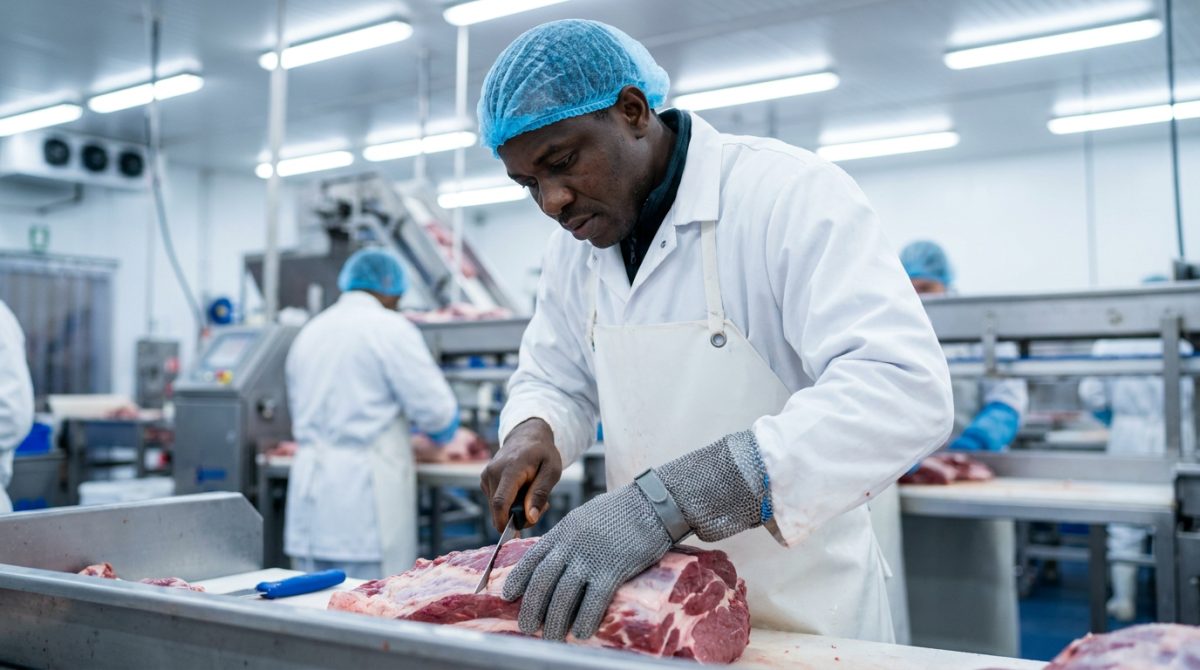
Meat processing jobs in Australia with visa sponsorship are the other door into Australia for workers without degrees — and like aged care, it exists because the government built a specific mechanism for it rather than because ordinary skilled migration allows it.
Australian abattoirs are concentrated in regional towns that cannot staff them locally. The Meat Industry Labour Agreement exists to solve that, and it carries a permanent residence pathway.
Quick summary: The Meat Industry Labour Agreement (MILA) lets approved processors sponsor overseas workers for the single occupation of skilled meat worker — covering boners, slicers and slaughterers — nominated under code 070499. You must demonstrate competency equivalent to an AQF Certificate III in Meat Processing, benchmarked by MINTRAC. Sponsorship runs up to 4 years with a permanent residence pathway. English, salary and age concessions may apply for regional businesses. Verify at immi.homeaffairs.gov.au.
Why Australia Sponsors Foreign Meat Workers
Meat processing is one of Australia’s largest export industries and it operates almost entirely in regional areas. Abattoirs employ hundreds of people in towns of a few thousand, doing physically hard work in cold rooms. Australian workers have declined those roles in the numbers required for decades.
Unlike aged care, this is not a new problem or a new solution. The meat industry has used labour agreements for years, which means employers in this sector are experienced sponsors who understand the process properly.
The Single-Occupation Structure
MILA is unusual in that employers can nominate only one occupation: skilled meat worker. There is no ANZSCO code for it, so code 070499 is used instead.
| Role Covered | What It Involves | Typical Salary (AUD) |
|---|---|---|
| Boner | Removing bone from carcasses with precision knife work | $60,000–85,000 |
| Slicer | Cutting and trimming meat to specification | $58,000–80,000 |
| Slaughterer | Initial processing on the slaughter floor | $60,000–85,000 |
| Skilled meat worker (general) | Combination of the above under code 070499 | $58,000–85,000 |
These are genuinely well-paid roles. A skilled boner in an Australian abattoir can earn more than many university graduates, because the work requires real knife skill developed over years, and because tally systems reward speed and yield.
The MINTRAC Skills Benchmark
This is the requirement that decides most applications. You must demonstrate competency equivalent to an AQF Certificate III in Meat Processing, benchmarked by MINTRAC — the Meat Industry National Training Advisory Council.
- You do not need an Australian qualification, but you must prove equivalent skill.
- Assessment focuses on demonstrable competency: knife skills, yield, hygiene, safety.
- Documented experience in a commercial abattoir or processing plant is central.
- Reference letters must specify species handled, cuts performed and years of experience.
Be precise in your documentation. “Butcher, 5 years” tells an Australian assessor nothing. “Beef boner, 6 years, forequarter and hindquarter, commercial abattoir processing 400 head daily” tells them exactly what you can do. Vague CVs are the most common reason capable meat workers fail this benchmark.
How the Process Works
- A processor signs a labour agreement with the Australian Government, having proved genuine domestic recruitment efforts.
- You apply directly to that processor. There is no independent application route.
- Your skills are assessed against the MINTRAC benchmark.
- The employer nominates you as a skilled meat worker under code 070499.
- You meet English, health and character requirements, with regional concessions possibly applying.
- You apply for the sponsored visa under the labour agreement stream.
- You work in Australia for up to four years.
- You pursue permanent residence where you and your employer qualify.
Regional Concessions — a Real Advantage
MILA allows English, salary and age concessions for regional businesses. Since virtually all Australian abattoirs are regional, this matters more here than in most sectors.
| Concession | What It Can Mean |
|---|---|
| English | Lower language threshold than standard skilled visas |
| Salary | Flexibility on income thresholds in regional areas |
| Age | Relief from standard age limits in some circumstances |
| Regional residence | Additional permanent residence options for regional workers |
The age concession deserves attention. Standard Australian skilled migration effectively excludes applicants over 45. Where a regional labour agreement includes age concessions, that barrier can be reduced — which makes this one of the few Australian routes realistically available to older experienced workers.
What the Work Actually Involves
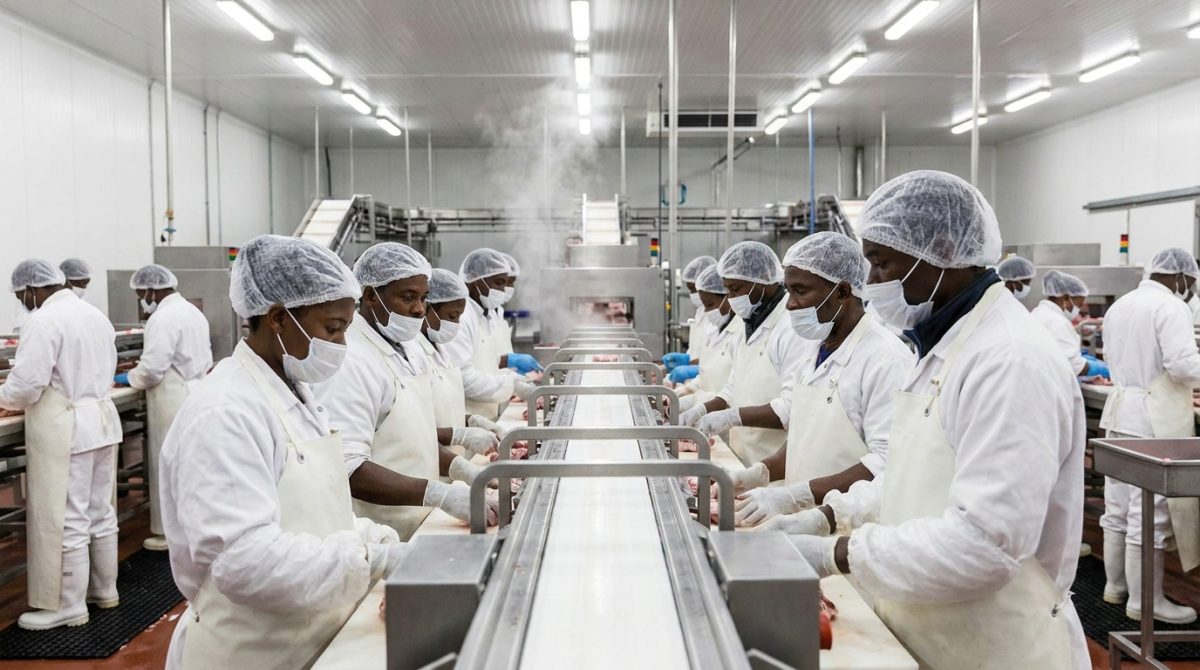
- Cold environments — processing floors operate near freezing year-round.
- Repetitive precision knife work at sustained line speed.
- Early starts, with many plants beginning shifts before dawn.
- Physical demands and genuine repetitive strain risk.
- Strict hygiene protocols including chainmail gloves, aprons and full protective clothing.
- Regional living — abattoir towns are small and often isolated.
- Tally systems where pay is linked to output, rewarding skill and speed.
This is demanding work that pays accordingly. Anyone describing it as easy is not being honest with you.
Your Rights as a Sponsored Worker
| Right | Position |
|---|---|
| Award wages | Full Australian award rates regardless of nationality |
| Superannuation | Employer contributions on top of wages |
| Workers’ compensation | Mandatory — important in a high-injury sector |
| Union membership | Many Australian abattoirs are unionised |
| Annual and sick leave | Full entitlements |
| Fair Work protection | Complaints protected from immigration reprisal |
| Protective equipment | Employer must supply chainmail and cold weather gear |
| Family | Dependants generally permitted |
Requirements and Documents Checklist
- Valid international passport
- Nomination from a processor holding a meat industry labour agreement
- Evidence of competency equivalent to AQF Certificate III in Meat Processing
- Detailed reference letters specifying species, cuts, plant throughput and years
- English test results, unless a regional concession applies
- Health examination including chest X-ray
- Police clearance certificates from all countries of residence since age 16
Mistakes to Avoid
- Applying without a labour agreement employer. No independent route exists.
- Writing a vague CV. Specify species, cuts, positions and plant scale.
- Ignoring the MINTRAC benchmark. It is the main technical hurdle.
- Assuming concessions apply automatically. They are negotiated per agreement.
- Paying an agent for an “Australian meat worker visa”. Only employers can sponsor.
- Overlooking the tally system. Understand how you will actually be paid.
- Underestimating regional isolation. These towns are small and remote.
Frequently Asked Questions
Can Nigerians get meat processing jobs in Australia with visa sponsorship?
Yes, through the Meat Industry Labour Agreement. An approved processor must sponsor you as a skilled meat worker under code 070499. There is no independent application route.
What qualification do I need?
Competency equivalent to an AQF Certificate III in Meat Processing, benchmarked by MINTRAC. You do not need an Australian qualification, but you must demonstrate equivalent practical skill through documented commercial experience.
How much do meat workers earn in Australia?
Typically AUD $58,000 to $85,000, with skilled boners on tally or piece-rate systems often earning above that. These are well-paid roles because the knife skill takes years to develop.
What is a tally system?
A pay structure linking earnings to output rather than hours alone, common in Australian boning rooms. Skilled, fast workers earn more. Understand exactly how your pay will be calculated before accepting an offer.
Are there concessions for older applicants?
Possibly. MILA permits age concessions for regional businesses, which can reduce the standard age barrier that excludes most applicants over 45 from Australian skilled migration. Concessions are negotiated within each agreement, so ask the employer directly.
Do I need strong English?
English requirements apply but regional concessions may lower the threshold. Confirm with the sponsoring processor which standard their labour agreement specifies before booking a test.
How long can I stay and can I get permanent residence?
Sponsorship runs up to four years, with a permanent residence pathway available where you and your employer meet the requirements. Regional workers may also access additional regional residence options.
Can I bring my family?
Dependants are generally permitted on sponsored work visas, which is a significant advantage compared with temporary seasonal routes elsewhere.
How do I find a processor with a labour agreement?
Large Australian meat processors advertise internationally and state their sponsorship capability. Approach them directly through their official websites and ask explicitly whether they hold a meat industry labour agreement.
Is the work dangerous?
It carries genuine risk — sharp knives, cold, repetitive strain. Australian workplaces are heavily regulated, protective equipment including chainmail gloves is mandatory and employer-supplied, and workers’ compensation coverage is compulsory.
Final Word
Meat processing is the best-paid accessible route in this entire series, and one of only two realistic ways into Australia without a degree. It rewards genuine knife skill, offers family rights, carries a permanent residence pathway, and through regional concessions may be open to older workers who are excluded from every other Australian route.
Two things decide whether it works: finding a processor that already holds a labour agreement, and documenting your experience precisely enough to clear the MINTRAC benchmark. Get both right and this is among the strongest options available to you.
This article is general information, not legal advice. Immigration rules change frequently — confirm all requirements at immi.homeaffairs.gov.au before acting. See our Disclaimer.