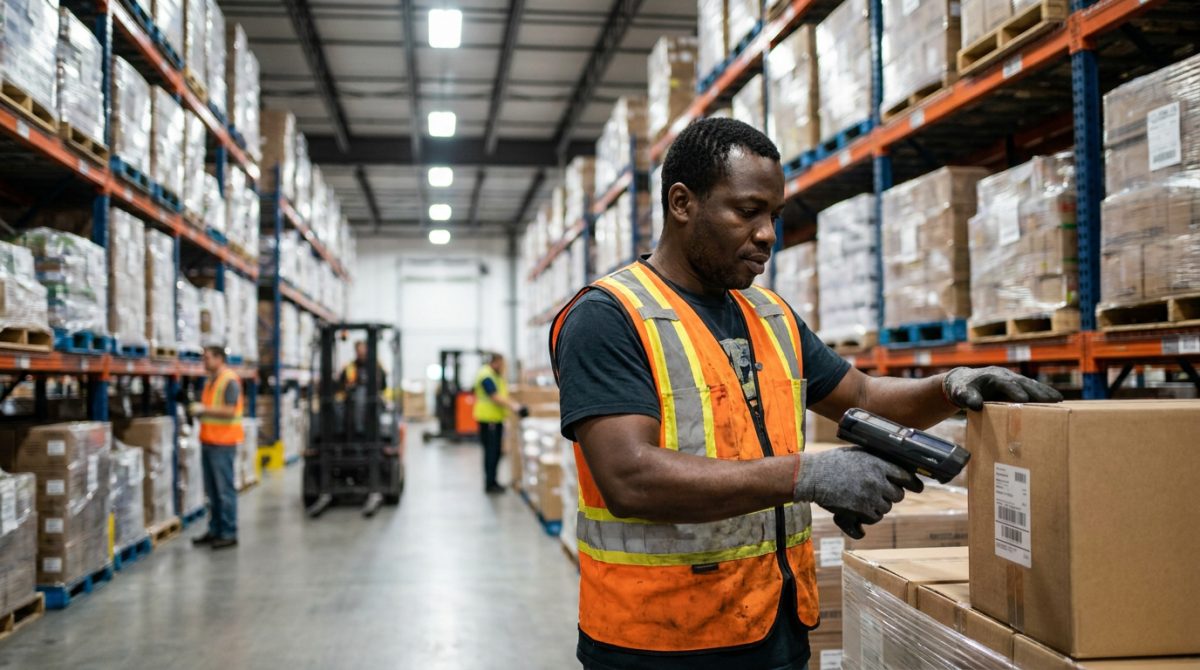
Warehouse jobs in Canada with visa sponsorship have expanded steadily as e-commerce reshaped Canadian retail. Distribution centres now operate around the clock in every province, and they need people who can work reliably rather than people with degrees.
This guide explains which warehouse roles can actually be sponsored, which classification you should push for, what the work pays, and how permanent residence works — because the difference between two very similar warehouse jobs can decide whether you can ever stay.
Quick summary: Material handlers are NOC 75101 (TEER 5), storekeepers NOC 74201 (TEER 4), and shippers and receivers NOC 12013 (TEER 3). Sponsorship runs through an employer LMIA. Wages run CAD $17–27 per hour with night premiums. Only NOC 12013 reaches the Canadian Experience Class. Verify every posting on Job Bank.
Why Canada Sponsors Foreign Warehouse Workers
Canadian distribution has grown enormously while the domestic labour pool has not. Warehouses concentrate around Toronto, Vancouver, Calgary and Montreal, in areas where housing costs push local workers toward better-paid work. Night and weekend shifts are chronically hard to fill.
Automation has changed the work rather than removed it. Modern Canadian distribution centres still need people to pick, pack, scan, load and operate equipment — and increasingly need them at hours Canadians decline.
Types of Warehouse Jobs Available With Sponsorship
| Role | NOC Code | TEER | Typical Wage (CAD) | PR Access |
|---|---|---|---|---|
| Material handler / warehouse worker | 75101 | TEER 5 | $17–23 / hour | Limited |
| Order picker / packer | 75101 | TEER 5 | $17–22 / hour | Limited |
| Storekeeper / parts clerk | 74201 | TEER 4 | $19–27 / hour | Moderate |
| Shipper / receiver | 12013 | TEER 3 | $20–28 / hour | Strong — CEC eligible |
| Forklift operator | 75101 | TEER 5 | $19–26 / hour | Limited — certification helps |
| Inventory clerk | 14400 | TEER 4 | $19–26 / hour | Moderate |
| Warehouse supervisor | 12013 | TEER 3 | $25–38 / hour | Strong |
| Logistics coordinator | 13201 | TEER 3 | $24–36 / hour | Strong |
Look at the third and fourth rows. A material handler and a shipper/receiver often do overlapping work in the same building, but one is TEER 5 and the other TEER 3. Shipper/receiver roles involve documentation, verification against manifests and coordinating with carriers — and that record-keeping element is exactly what lifts the classification. If you can demonstrate literacy and organisation, push for that title.
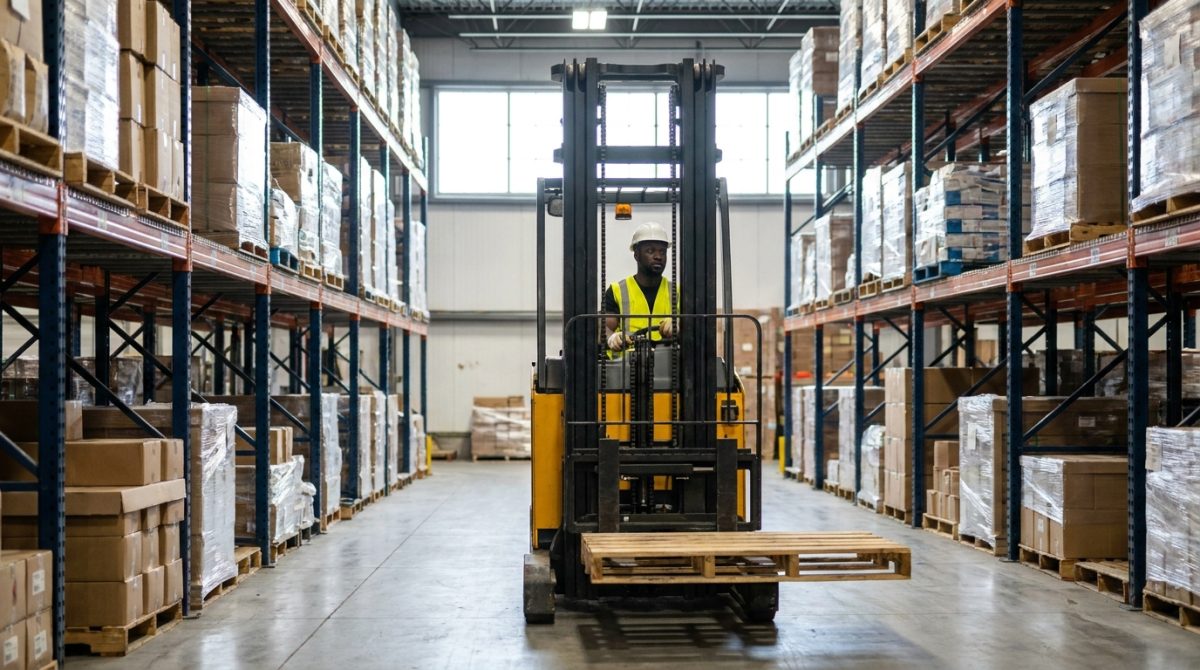
Visa Types for Warehouse Work in Canada
| Route | LMIA Required? | Duration | Notes |
|---|---|---|---|
| Low-wage stream work permit | Yes | Up to 2 years | Employer housing assistance required |
| High-wage stream work permit | Yes | Up to 3 years | Higher-classified roles |
| Provincial Nominee supported permit | Varies | Until PR processed | Some semi-skilled streams |
| RCIP-linked permit | No LMIA | Bridging to PR | Rural distribution hubs |
| Spousal open work permit | No | Matches principal | Not automatic at TEER 5 |
Visa Requirements for Employment
- A genuine job offer from a Canadian employer with a positive LMIA.
- Physical capability for lifting, walking long distances and sustained standing.
- Basic English to read labels, follow safety rules and use scanning systems.
- Forklift certification — not required to apply, but obtained in Canada it raises your wage immediately.
- Police clearance certificates from all countries of residence since age 18.
- Medical examination where required.
- Valid international passport.
Warehouse job scams follow a specific pattern. They name a very large, recognisable retailer or logistics company, promise “free visa and accommodation”, and request a processing fee. Major Canadian employers recruit through their own careers portals and through Job Bank. They do not appoint WhatsApp agents, and they never charge you.
Where Warehouse Jobs Actually Are
Canadian distribution employment concentrates in a small number of corridors. Knowing where they are focuses your search considerably.
- Greater Toronto Area — Brampton, Mississauga and Milton form the largest distribution cluster in Canada.
- Metro Vancouver — Surrey, Delta and Richmond, driven by port traffic.
- Calgary and Edmonton — western distribution hubs.
- Montreal region — French language ability is often expected.
- Winnipeg — central hub with a comparatively accessible provincial nominee programme.
Employer types worth targeting: grocery retail distribution centres, third-party logistics providers, e-commerce fulfilment operators, and food and beverage distributors. Grocery distribution in particular runs year-round with predictable volumes rather than seasonal peaks.
Employment Agencies and Official Resources
| Resource | What It Is | Official Website |
|---|---|---|
| Job Bank | Government job board; LMIA warehouse roles posted here | jobbank.gc.ca |
| CICC | Verify any immigration consultant | college-ic.ca |
| ESDC compliance list | Employers found non-compliant with the TFWP | canada.ca |
| Provincial employment standards | Wage, overtime and break entitlements | Provincial government sites |
| Canadian Anti-Fraud Centre | Report recruitment fraud | antifraudcentre-centreantifraude.ca |
A caution about agencies: much Canadian warehouse hiring runs through temporary staffing agencies. Legitimate agencies exist and are regulated provincially. But agency placement often means lower wages, no benefits, and less stable hours than direct employment — and an agency contract is weaker evidence for a permanent residence application than a direct employer relationship. Prefer direct hire where you can get it.
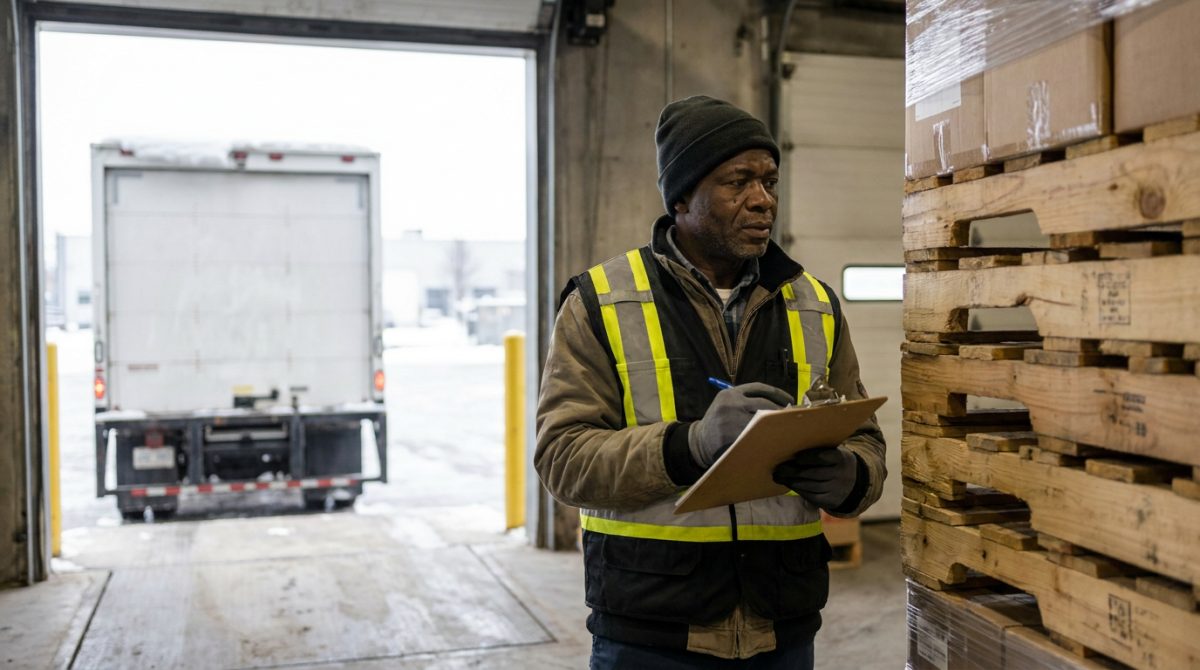
Permanent Residence Pathways
| Programme | Open to TEER 5 Warehouse Work? | Best For | Official Source |
|---|---|---|---|
| Canadian Experience Class | No — but yes at NOC 12013 | Shippers, receivers, supervisors | canada.ca |
| Provincial Nominee semi-skilled | Some provinces | Province-specific offers | Provincial sites |
| Rural Community Immigration Pilot | Yes, in participating communities | Rural distribution hubs | canada.ca |
| Atlantic Immigration Program | Yes, designated employers | Atlantic Canada logistics | canada.ca |
| Express Entry (FSW) | No at TEER 5 | Logistics coordinators | canada.ca |
The route that works here is unusually clear. Get into a warehouse on any classification, then move to shipper/receiver (NOC 12013) as quickly as possible. That is TEER 3, which means one year of Canadian experience in the role qualifies you for the Canadian Experience Class. Warehouses promote internally constantly, and the step from picker to shipper/receiver is one of the most achievable moves in Canadian entry-level employment.
Settlement Benefits and Your Rights
| Benefit | On a Work Permit? | With PR? | Notes |
|---|---|---|---|
| Employer housing assistance | Yes, low-wage stream | — | Employer must help you find accommodation |
| Private health insurance | Yes | — | Until provincial coverage begins |
| Public healthcare | Usually yes | Yes | Provincial |
| Free public schooling | Yes | Yes | Dependent children |
| Workers’ compensation | Yes | Yes | Lifting injuries are the main risk |
| Overtime and breaks | Yes | Yes | Provincial standards apply regardless of status |
| Employer-funded forklift training | Often | Often | Ask — it raises your wage |
| Path to citizenship | No | Yes | After three years of physical presence in five |
Requirements and Documents Checklist
- Valid international passport
- Signed job offer stating NOC code, wage, hours and shift pattern
- Positive LMIA number
- Any warehouse, logistics or stock control experience
- Forklift certification if held
- Police clearance certificates
- Medical examination where required
- Proof of funds for initial settlement
Applying at the High Commission and Visa Verification
Canadian High Commission Contacts in Nigeria
| Office | Address | Telephone | |
|---|---|---|---|
| High Commission of Canada, Abuja | 13010G Palm Close, Diplomatic Drive, Central Business District, Abuja (P.O. Box 5144) | +234 (209) 461 2900 | abuja@international.gc.ca |
| Deputy High Commission of Canada, Lagos | 4 Anifowoshe Street, Victoria Island, Lagos | +234 201 271 5665 | lagosconsular-consulaire@international.gc.ca |
Mistakes to Avoid
- Settling for NOC 75101 when 12013 is achievable. The PR difference is decisive.
- Paying an agent for a warehouse job. Employers pay the LMIA, not you.
- Assuming a big retailer’s name in an advert makes it genuine. Large employers are the most impersonated.
- Accepting agency placement without comparing direct hire. Weaker pay and weaker PR evidence.
- Not asking about forklift certification. Employer-funded training raises your wage quickly.
- Ignoring lifting technique and injury reporting. Workers’ compensation exists for you.
- Overlooking Winnipeg and smaller hubs in favour of Toronto, where competition is fiercest.
How to Apply for Warehouse Jobs in Canada With Visa Sponsorship
- Search Job Bank for NOC 75101, 74201 and 12013 roles open to LMIA candidates.
- Apply directly to grocery distribution centres, third-party logistics providers and fulfilment operators.
- Target shipper/receiver (NOC 12013) postings wherever you meet the requirements.
- Prefer direct employment over staffing agency placement.
- Confirm the LMIA and check the employer’s compliance record.
- Apply for the work permit through the IRCC secure account.
- Complete biometrics and any required medical.
- On arrival, obtain forklift certification and work toward a TEER 3 role.
Frequently Asked Questions
Can I get a warehouse job in Canada with visa sponsorship and no experience?
Yes. Picking, packing and material handling roles require no formal qualifications. The requirement is an employer holding a positive LMIA, basic English for safety and scanning systems, and physical capability for the work.
How much do warehouse workers earn in Canada?
General warehouse workers typically earn CAD $17 to $23 per hour. Forklift operators and shippers/receivers earn $19 to $28, and night shifts carry premiums on top.
Which warehouse role is best for permanent residence?
Shipper/receiver, NOC 12013, at TEER 3. It qualifies for the Canadian Experience Class after one year of Canadian work, whereas general material handling at TEER 5 does not. The work overlaps considerably, so aim for the higher classification.
Do I need a forklift licence before applying?
No. Canadian employers commonly provide forklift certification after you start, and it raises your wage immediately. Ask whether training is funded during your interview.
Should I go through a staffing agency?
Direct employment is generally better. Agencies are widely used and many are legitimate, but agency work often means lower pay, fewer benefits, less stable hours, and weaker evidence for a permanent residence application.
Where are most Canadian warehouse jobs located?
The Greater Toronto Area, particularly Brampton, Mississauga and Milton, is the largest cluster. Metro Vancouver, Calgary, Edmonton, Montreal and Winnipeg follow. Winnipeg is worth considering for its more accessible provincial nominee options.
Is warehouse work in Canada physically demanding?
Yes. Expect repeated lifting, several kilometres of walking per shift, and sustained standing. Lifting injuries are the main occupational risk, and workers’ compensation coverage is mandatory.
Can I bring my family on a warehouse work permit?
Spousal open work permit eligibility is not automatic at TEER 5. If you reach a TEER 3 role such as shipper/receiver, your position improves. Confirm the current rules for your specific NOC.
How do I know a warehouse job offer is genuine?
Find the posting on Job Bank, ask for the LMIA number, verify the employer independently through their official website, and check the public ESDC list of non-compliant employers. Never pay a fee.
How long does the process take?
Typically six to fourteen months from job search to arrival, with the LMIA the longest stage.
Final Word
Warehouse work is one of the most straightforward ways into Canada for a Nigerian applicant without qualifications, and one of the easiest sectors in which to move up quickly. Distribution centres promote internally because they are constantly short-staffed.
Take that seriously as a strategy rather than an afterthought. The gap between a material handler and a shipper/receiver is a few months of reliability and a willingness to handle paperwork — and it is the difference between a temporary permit and a permanent residence application.
This article is general information, not legal advice. Immigration rules change frequently — confirm all requirements on canada.ca before acting. See our Disclaimer.