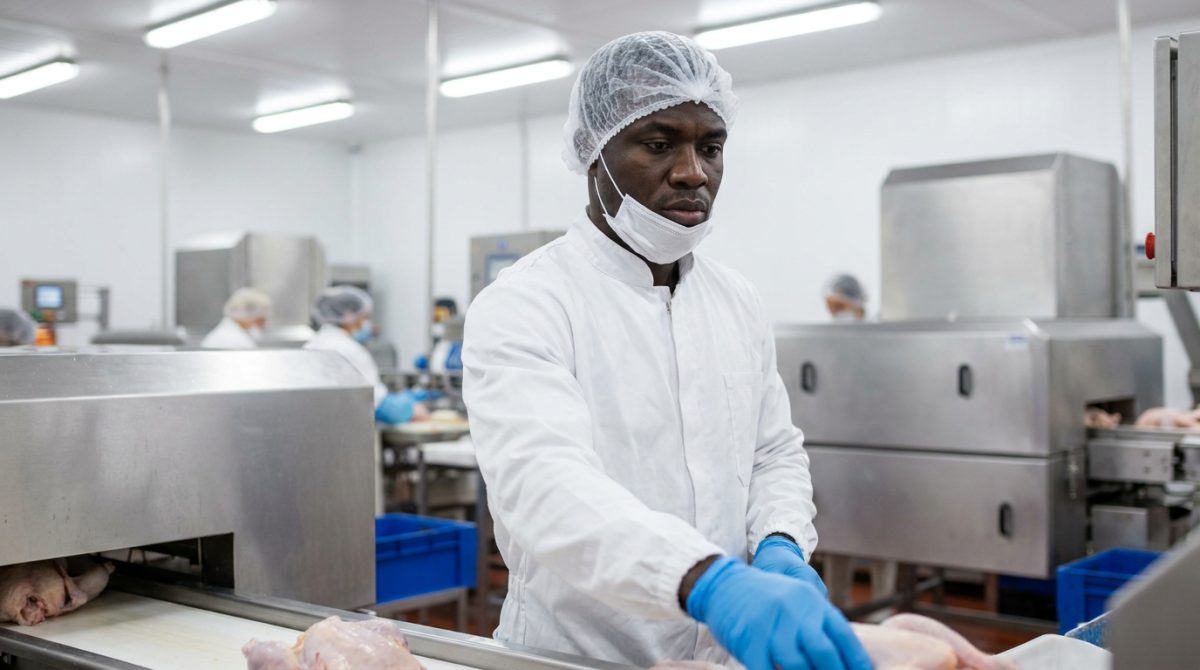
Poultry jobs in the UK with Seasonal Worker visa sponsorship are the smallest and most tightly time-boxed route in this series — and for the right applicant, one of the most straightforward. The entire scheme runs for three months a year, exists to supply the Christmas poultry market, and is open to Nigerian applicants without qualifications or an English test.
It is also the smallest allocation in the UK immigration system that ordinary workers can access, so understanding the timing is everything.
Quick summary: The poultry strand of the Seasonal Worker visa has just 1,900 places for 2026, against 41,000 for horticulture. Grants run strictly from 2 October to 31 December each year. The fee is £340. You must be sponsored by an approved scheme operator. There is no settlement route and no dependants. Verify on GOV.UK.
Why the Poultry Route Exists
British poultry demand spikes enormously in the run-up to Christmas. Processing plants and farms need large numbers of additional workers for a compressed period, then release them. No domestic workforce exists to absorb that pattern, so a dedicated immigration strand was created to cover it.
This is why the dates are fixed rather than flexible. The visa is not designed around your availability; it is designed around the British Christmas.
The Timing — Read This Carefully
| Feature | Poultry Strand | Horticulture Strand (for comparison) |
|---|---|---|
| 2026 places | 1,900 | 41,000 |
| Dates | 2 October – 31 December | Up to 6 months, flexible |
| Maximum stay | Approximately 3 months | 6 months |
| Competition | Very high — small allocation | High |
| Work type | Processing and farm work | Picking, packing, field work |
| Indoor or outdoor | Mostly indoor, temperature-controlled | Mostly outdoor and polytunnel |
| Settlement route | None | None |
Two practical consequences. First, with only 1,900 places the poultry strand is far more competitive than horticulture — if you are flexible about the work, horticulture is a much better statistical bet. Second, applications must be timed to the autumn window; approaching an operator in February about poultry work is approaching them nine months early.
One genuine advantage: poultry work is largely indoor and temperature-controlled, which some applicants prefer to picking fruit outdoors in British weather. It is also less weather-dependent, so hours tend to be more predictable.
The Scheme Operator System
As with horticulture, farms and processors do not sponsor you directly. Home Office-approved scheme operators hold the licence and place workers.
| Scheme Operator | Sector Reported | How to Verify |
|---|---|---|
| AG Recruitment | Poultry | Official Register of Licensed Sponsors |
| Fruitful Jobs | Poultry and horticulture | Official Register of Licensed Sponsors |
| Concordia | Horticulture | Official Register of Licensed Sponsors |
| HOPS | Horticulture | Official Register of Licensed Sponsors |
| Pro-Force | Horticulture | Official Register of Licensed Sponsors |
| Agri-HR | Horticulture | Official Register of Licensed Sponsors |
Only a handful of organisations can legally sponsor this visa, and the poultry strand is smaller still. If someone in Nigeria offers you UK poultry work and is not one of the approved operators, they cannot deliver it. The tiny allocation makes this strand especially attractive to fraudsters, because scarcity makes people desperate enough to pay.
What the Work Involves
Poultry roles under this scheme cover both farm and processing work:
- Processing line work — cutting, trimming, portioning and packing in temperature-controlled plants.
- Hygiene and sanitation — maintaining plant cleanliness to food safety standards.
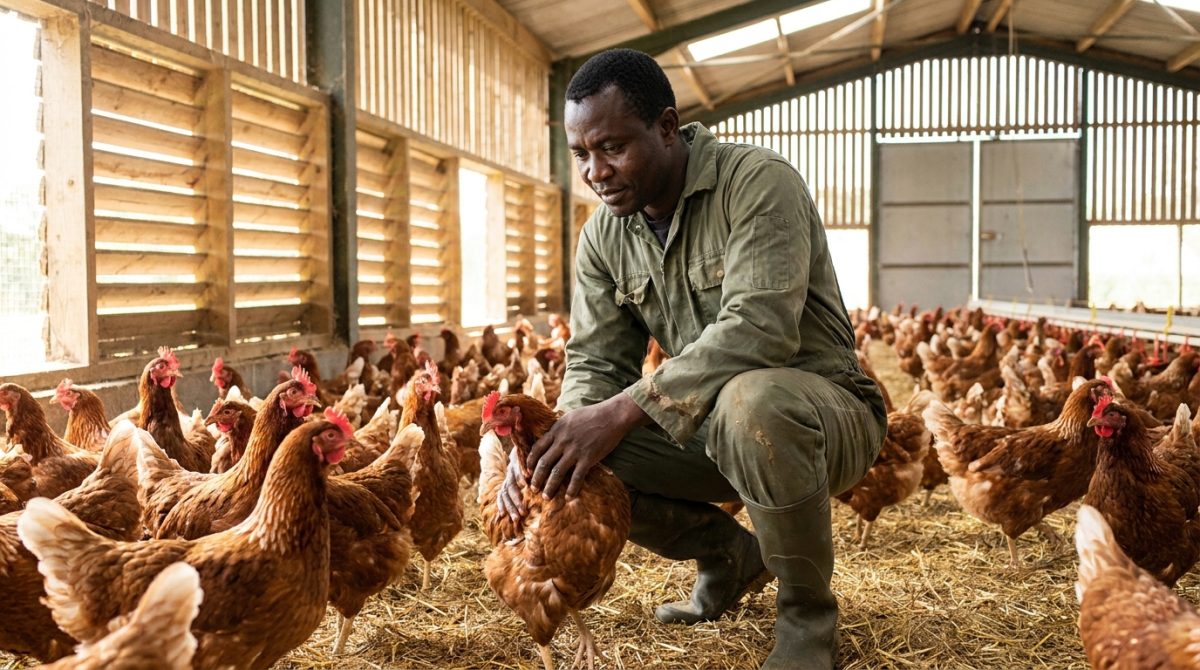
- Poultry farm work — bird husbandry, catching and handling.
- Packing and dispatch — preparing product for retailers.
Expect cold environments, standing for full shifts, repetitive tasks at line speed, and strict hygiene protocols including hairnets, protective clothing and handwashing discipline. Overtime is common in the Christmas peak, and it is paid.

Your Rights and Protections
| Protection | Entitlement |
|---|---|
| Minimum wage | At least the UK National Minimum Wage for your age band |
| Guaranteed hours | Minimum weekly hours guarantee applies under the scheme |
| Overtime pay | Payable — common during the Christmas peak |
| Accommodation | Provided; deductions capped by regulation |
| Protective equipment | Employer must supply for cold and hygiene requirements |
| Payslips | Must itemise hours, pay and all deductions |
| Passport | Stays in your possession at all times |
| Right to complain | To operator, GLAA or Home Office without reprisal |
Requirements and Documents
- A Certificate of Sponsorship from an approved scheme operator.
- Age 18 or over.
- Proof of maintenance funds unless certified by your sponsor.
- Tuberculosis test certificate — mandatory for Nigerian applicants.
- Valid international passport.
- Physical capability for cold, repetitive standing work.
- Application fee of £340.
How to Apply for UK Poultry Jobs
- Check the current approved operator list on GOV.UK and identify which operate the poultry strand.
- Time your application to the autumn window — operators recruit ahead of the 2 October start.
- Apply directly on the operator’s official website.
- Verify the operator on the Register of Licensed Sponsors before sending documents.
- Complete the recruitment process and receive your Certificate of Sponsorship if selected.
- Apply for the visa online and pay £340.
- Complete your TB test and attend biometrics in Nigeria.
- Travel, work the season, and leave by 31 December.
British High Commission Contacts in Nigeria
| Office | Address | Telephone |
|---|---|---|
| British High Commission, Abuja | Plot 1137, Diplomatic Drive, Central Business District, Abuja, FCT | +234 (0)20 12770780 / 0781 / 0782 |
| British Deputy High Commission, Lagos | 11 Walter Carrington Crescent, Victoria Island, Lagos | Contact via official FCDO online form |
Mistakes to Avoid
- Applying at the wrong time of year. The poultry window is fixed: 2 October to 31 December.
- Ignoring how small the allocation is. 1,900 places against 41,000 for horticulture.
- Paying an agent. Approved operators recruit directly and do not charge workers.
- Expecting settlement or family reunion. Neither exists on this route.
- Overstaying past 31 December. It permanently ends future seasonal returns.
- Not budgeting for the TB test and travel alongside the £340 fee.
- Overlooking horticulture, which has twenty times more places and a longer stay.
Frequently Asked Questions
Can Nigerians apply for UK poultry jobs on the Seasonal Worker visa?
Yes. The Seasonal Worker visa has no nationality restriction. Nigerian applicants are eligible for both the poultry and horticulture strands.
When can I work in the UK poultry sector?
Poultry grants run strictly from 2 October to 31 December each year, tied to the Christmas market. You cannot arrive earlier or stay later on this strand.
How many poultry places are there?
1,900 for 2026, compared with 41,000 for horticulture. It is a small and highly competitive allocation.
Should I apply for poultry or horticulture?
Statistically, horticulture. It has roughly twenty times more places and allows up to six months rather than three. Poultry suits applicants who specifically prefer indoor, temperature-controlled work or whose availability matches the autumn window.
Do I need qualifications or an English test?
No formal qualifications or English test are required. This is why verifying your scheme operator is the most important step you will take.
How much does it cost?
The visa fee is £340, plus a tuberculosis test at an approved clinic in Nigeria and your travel costs.
Can I bring my family or settle in the UK?
No to both. Dependants are not permitted and there is no path to settlement from this visa.
What is poultry work actually like?
Mostly indoor processing work in cold, temperature-controlled plants: cutting, trimming, packing and hygiene tasks at line speed, with strict food safety protocols. Overtime is common during the Christmas peak and is paid.
Will accommodation be provided?
Yes, normally through the operator or employer, with deductions capped by regulation and itemised on your payslip.
Can I return the following year?
Yes, subject to cooling-off rules. Many seasonal workers return across multiple years, which is why complying fully with your visa conditions matters.
Final Word
The poultry strand is narrow, brief and heavily oversubscribed, but it is legal, wage-protected and open to Nigerian applicants with no qualifications. For anyone whose availability fits the October to December window and who prefers indoor work, it is a real opportunity.
For most people, though, the honest advice is to look at horticulture first. Twenty times the places and twice the duration is not a close comparison. Whichever you choose, start at the GOV.UK operator list and apply directly — never through an agent.
This article is general information, not legal advice. Immigration rules, allocations and operator lists change annually — confirm all details on gov.uk before acting. See our Disclaimer.